
How Long Does It Take to Get CCNA Certified? A Complete Timeline for Career Changers and IT Professionals
How Long to Train for CCNA: Timeline for Career Changers & IT Pros


CCNA Training Timeline Overview
If you are considering a transition into IT or looking to move up from an entry-level tech role, earning the Cisco Certified Network Associate (CCNA) certification is often your first major milestone. But how long to train for CCNA, what does a realistic certification timeline look like, and what steps can help you succeed, especially if you are a career changer or non-traditional learner? This guide breaks down the process, from understanding the updated 2026 CCNA exam to mapping a clear study plan and leveraging hands-on training for real job opportunities.
The Typical Timeline to CCNA Certification
The time required to train for the CCNA varies by background, study method, and prior IT exposure, but most career changers and IT professionals spend three to six months preparing for the exam with structured, hands-on training.
For most people, it takes between 3 and 6 months to train for the CCNA certification if you follow a structured, hands-on learning program. Learners with some IT background may progress faster, while those new to tech might need closer to six months to master all exam domains and real-world skills.
What Factors Affect How Long to Train for CCNA?
Several factors influence the length of your CCNA preparation:
- Experience Level: Complete beginners need more time than those with prior networking or IT exposure.
- Study Format: Instructor-led bootcamps, like those at NGT Academy, typically accelerate learning compared to pure self-study.
- Time Commitment: Allocating 8-15 hours per week is recommended for steady progress.
- Access to Labs: Hands-on labs and real equipment or simulators (e.g., Cisco Packet Tracer) are essential for mastering scenario-based exam questions.
- Learning Style: Structured programs with mentorship and career support tend to yield higher pass rates and job readiness.
CCNA Exam Overview: What You Will Need to Learn
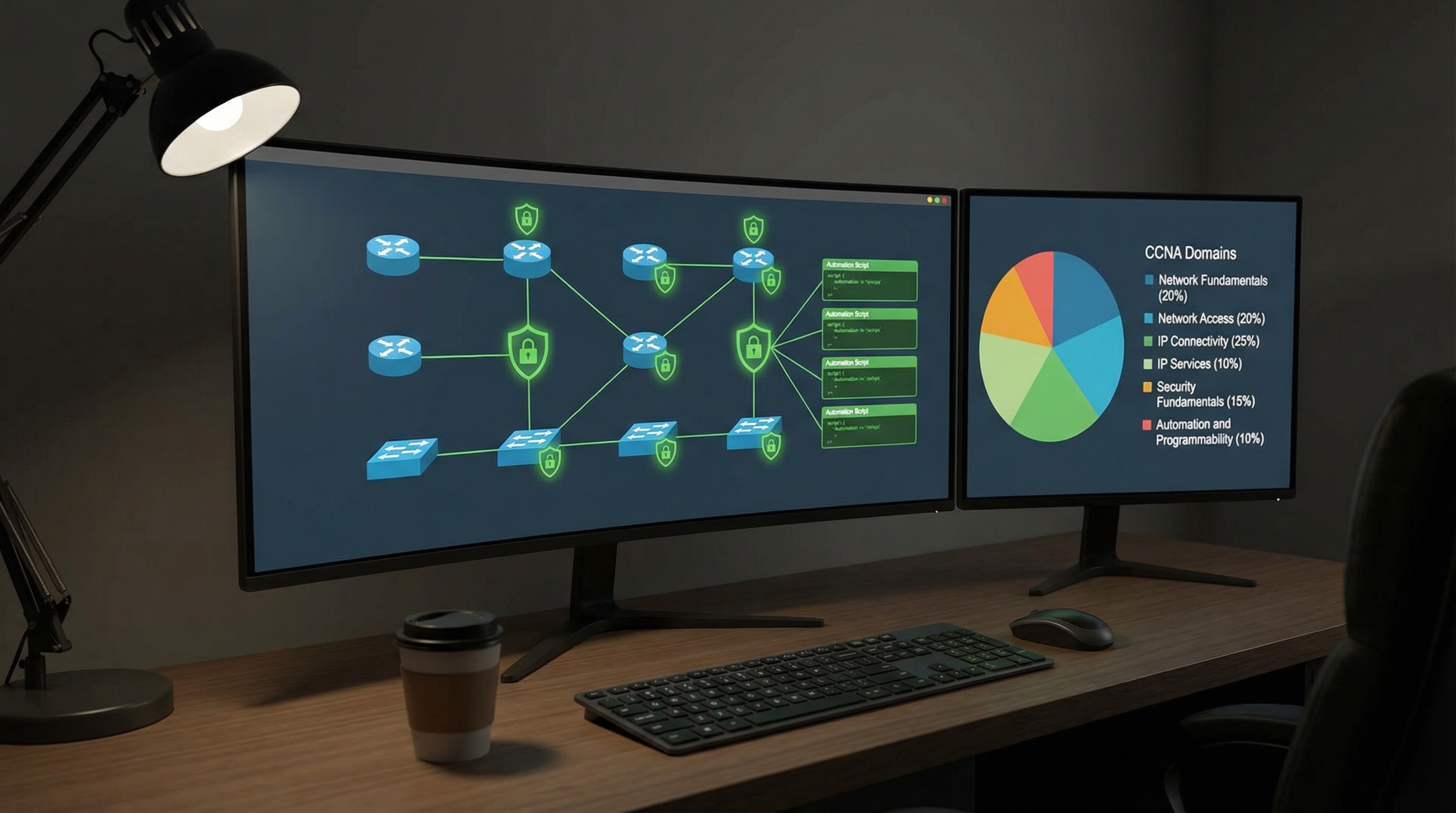
The CCNA (200-301) exam is designed to test your ability to install, configure, operate, and troubleshoot small to medium-sized networks. The 2026 update makes it broader, covering not just traditional networking but also security, automation, and programmability—key areas for modern IT infrastructure and cybersecurity careers.
- Network Fundamentals (20%)
- Network Access (20%)
- IP Connectivity (25%)
- IP Services (10%)
- Security Fundamentals (15%)
- Automation & Programmability (10%)
Modern CCNA candidates must understand core networking, basic security, and foundational automation concepts such as network APIs and Python scripting.
Choosing the Right Study Method: Self-Study vs. Structured Training
There are two primary paths to CCNA certification:
- Self-Study: Flexible and low-cost, but requires exceptional discipline and motivation. Success rates are lower, especially for those without prior IT experience.
- Instructor-Led Programs: Structured courses, like the NGT Academy Network Engineer Program + Cybersecurity Accelerator, combine live instruction, hands-on labs, mentorship, and career coaching—dramatically increasing your chances of passing the exam and landing a job.
Formal training accelerates your learning by providing direct feedback, real-world scenarios, and support from experienced mentors. This is especially vital for career changers or those without a traditional IT degree.
Step-by-Step Timeline: From Beginner to CCNA Certified
- Assess Your Background and Set Goals
Identify your starting point. If you are brand new to networking, plan for a 6-month journey. If you have some IT or help desk experience, you may be exam-ready in 3-4 months. - Choose Your Study Path
Decide between self-study with books and online resources, or enroll in a structured, hands-on training program such as NGT Academy’s Network Engineer track. - Master the CCNA Domains
Break down your learning by exam topics. Spend extra time on areas like IP connectivity and security fundamentals, and do not neglect automation and programmability. - Practice with Labs and Simulations
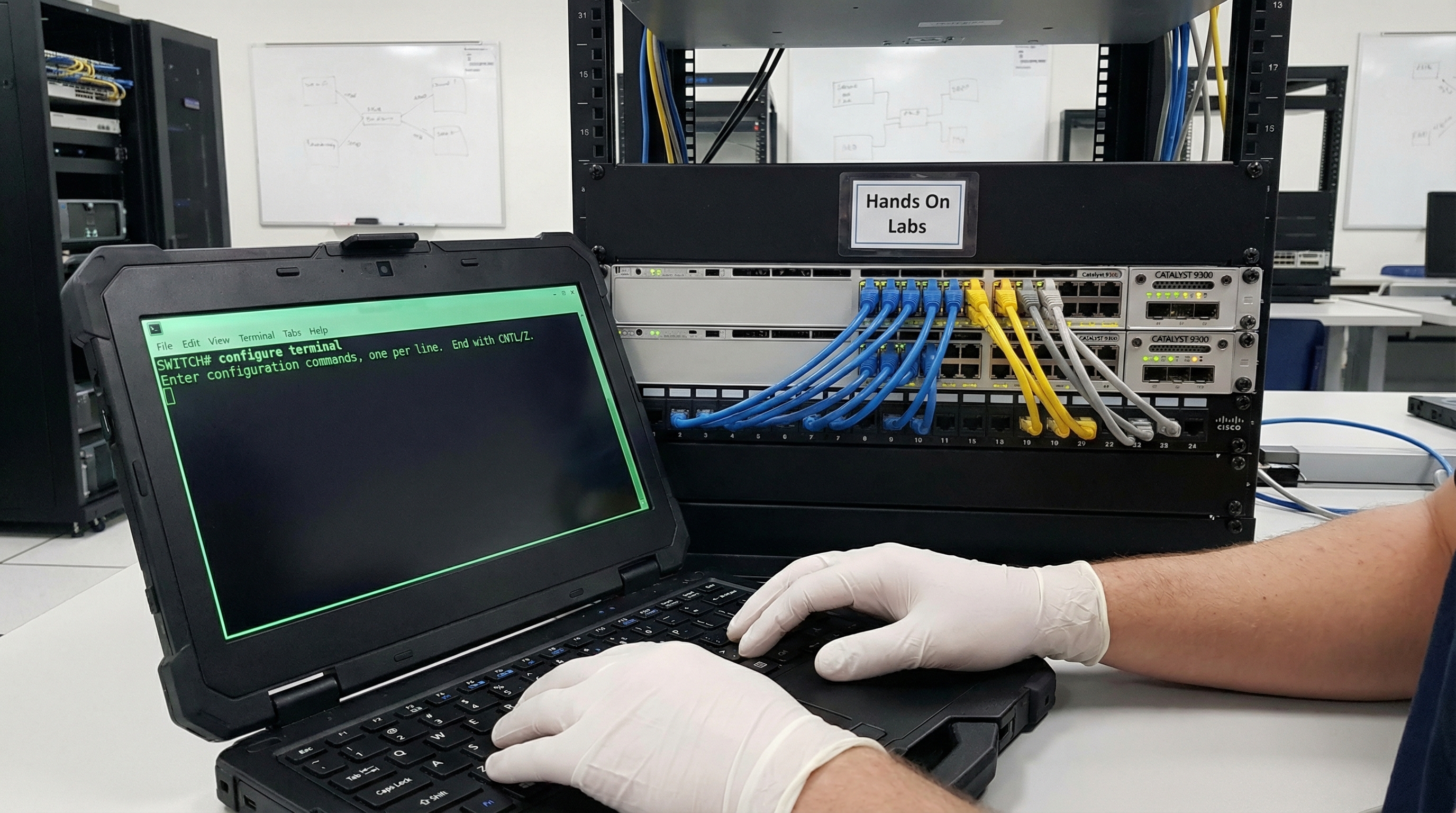
Dedicate significant time to hands-on labs. Use simulators and real equipment to practice configurations, troubleshooting, and scenario-based tasks. - Take Practice Exams
Use timed, scenario-based practice tests to build your confidence and improve time management. - Schedule and Sit for the Exam
Once you consistently score well on practice tests, book your exam through Pearson VUE. The CCNA exam fee is around $300 USD.
How Much Time Do Most Learners Spend Each Week?
On average, successful CCNA candidates dedicate 8–15 hours per week to study and labs. If you have a full-time job or family obligations, consider a part-time evening or weekend bootcamp format to maintain momentum. Consistent, focused study sessions are more effective than sporadic cramming.
Why Hands-On Training Matters for CCNA and Career Success
The latest Cisco exams are highly scenario-based, testing your ability to solve real-world problems, not just memorize facts. Employers value candidates who can demonstrate practical skills with routers, switches, and security tools. Hands-on labs, simulation exercises, and instructor feedback are critical, especially for career changers and veterans entering IT from outside fields.
NGT Academy’s programs are built around this philosophy, ensuring every learner graduates with job-ready skills and the confidence to succeed in the workforce.
What Happens After Getting Your CCNA?
With a CCNA, you can qualify for roles such as Network Technician, Junior Network Engineer, or Level 2 Help Desk Support. CCNA certification also lays the foundation for advanced credentials, including Cisco’s new cybersecurity and AI-focused certifications. The CCNA is valid for three years; you can renew by re-exam or by earning continuing education credits—another reason to consider structured programs that offer credits and ongoing support.
New Cisco Certification Pathways: Future-Proofing Your Career
The IT landscape is shifting rapidly, with Cisco updating its certification lineup to reflect the importance of AI, security, and automation across all roles. New pathways like the Cisco Certified Cybersecurity Associate and AI for Network Engineers badge make it easier to pivot toward high-demand specialties, even if you lack a traditional degree. Structured, lab-based training gives career changers and non-traditional learners a direct route into these emerging fields.
Ready to Start Your CCNA Journey?
If you are serious about launching or advancing your IT career, consider joining the NGT Academy Network Engineer Program + Cybersecurity Accelerator. Receive live instruction, hands-on labs, and personalized career coaching designed for adults, veterans, and career changers. Our mission is to help 1 million people get tech jobs by 2030—learn more about our values and approach on our mission page.
FAQ
How long does it really take to prepare for the CCNA as a total beginner?
Most total beginners can expect to spend 5–6 months preparing for the CCNA if they follow a structured, hands-on training program and dedicate 8–12 hours per week to study and labs.
Is hands-on lab work necessary for passing the CCNA exam?
Yes, hands-on labs are essential. The CCNA exam is scenario-based, and practical configuration skills are required to answer many exam questions and to succeed in real job roles.
Can I pass the CCNA with self-study alone?
While some candidates pass with self-study, structured programs with live instruction and labs significantly improve your chances, especially if you are new to IT or networking.
What are the most challenging CCNA exam topics for career changers?
IP connectivity, security fundamentals, and automation/programming are often the toughest for those without prior technical experience. Focused, guided training can help bridge these gaps.
How can NGT Academy help me prepare for the CCNA and find a job?
NGT Academy provides a hands-on, instructor-led path to CCNA certification, integrated with career coaching and job placement support, specifically designed for career changers and non-traditional learners.