
How to Write an IT Resume for Network Engineer: Get Hired and Advance Your Career
How to Write an IT Resume for Network Engineer: Stand Out for IT Jobs


Are you ready to launch or level up your IT career as a network engineer, but unsure how to make your resume stand out? This guide is designed for career changers, veterans, tech enthusiasts, and early-career professionals eager to break into networking or cybersecurity roles. We’ll cover the essential components, actionable strategies, and insider tips to help you write an IT resume for network engineer positions that gets noticed—whether you are aiming for your first job or moving up the ladder.
Key Elements of a Winning Network Engineer Resume
If you want to know how to write an IT resume for network engineer roles, focus on presenting your technical skills, hands-on experience, certifications, and measurable achievements. Tailoring your resume for the job description, using industry-relevant keywords, and keeping the document clear and concise will significantly improve your chances of landing interviews and advancing in IT networking and cybersecurity.
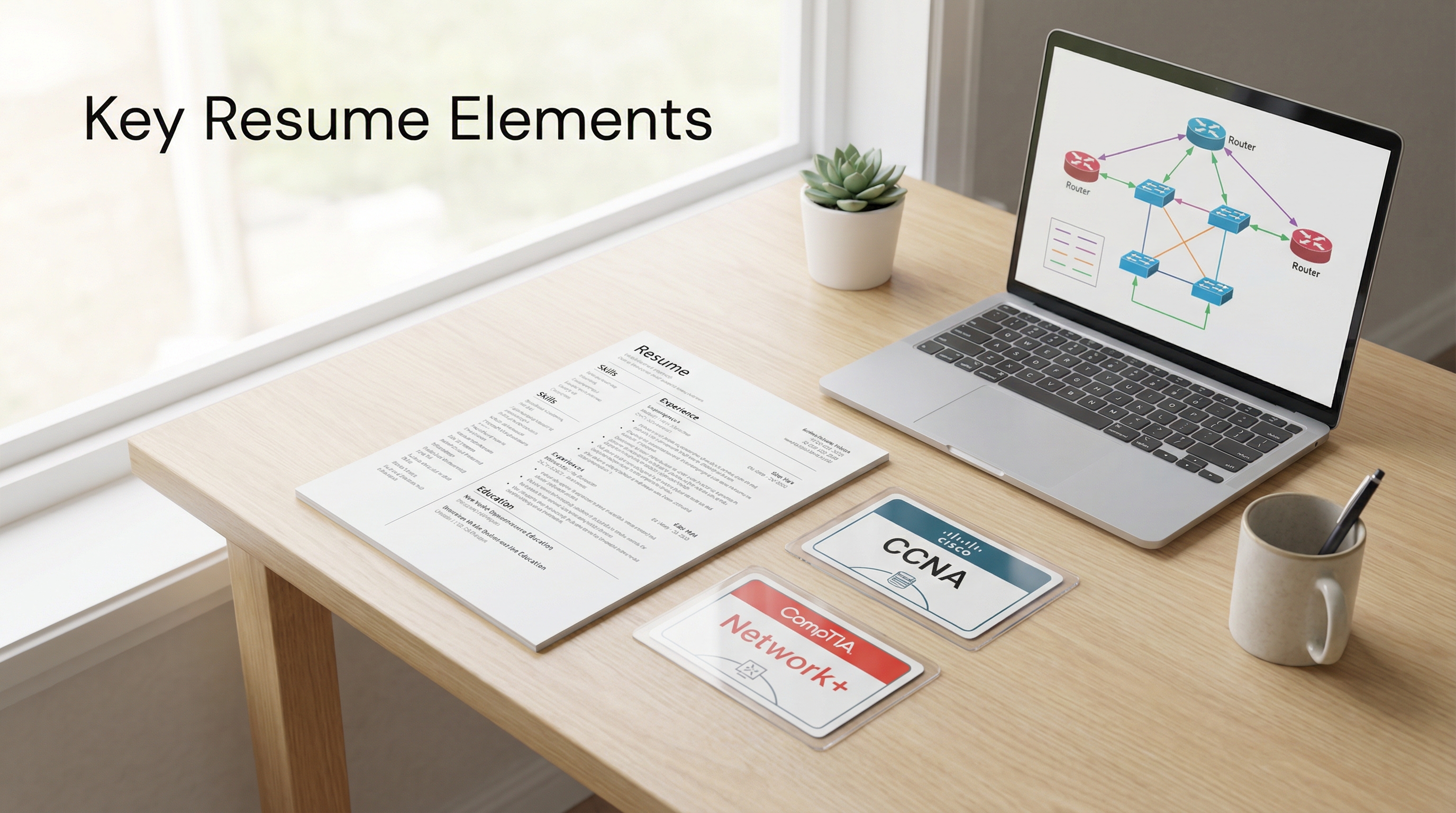
What Does a Network Engineer Resume Need to Cover?
Network engineering is a dynamic field, blending technical expertise with problem-solving, security awareness, and teamwork. Your resume should reflect this balance and cater to both automated screening systems (ATS) and human recruiters. Here’s what to include:
- Professional Summary: 2–3 sentences showcasing your experience, specializations (such as troubleshooting or project leadership), and quantifiable impact (e.g., reduced downtime by 20%).
- Technical Skills: Highlight core competencies like TCP/IP, LAN/WAN, network design, firewalls, scripting (Python, Ansible), wireless technologies, and cybersecurity.
- Certifications: Feature industry-recognized credentials such as CompTIA Network+, Cisco CCNA/CCNP, or CEH for those on the security track.
- Professional Experience: Use action verbs and bullet points that reflect results—"optimized network routing, reducing latency by 15%"—rather than listing routine tasks.
- Education: List your highest degree, but remember, hands-on skills and certifications often weigh more in IT than traditional degrees.
- Soft Skills: Showcase communication, teamwork, and documentation abilities, especially important for leadership or mentorship roles.
How to Highlight Hands-On Experience (Even If You’re Entry-Level)
Employers want proof of real-world problem-solving, not just theory. Here’s how to bring your hands-on skills to the front:
- Describe home lab projects—"Configured multi-site VLANs in a Packet Tracer lab, documented troubleshooting steps."
- Share volunteer or freelance IT/networking work—"Set up secure Wi-Fi for a local nonprofit, improving user satisfaction by 25%."
- Link to a GitHub, blog, or portfolio with scripts, diagrams, or project walkthroughs.
- Note participation in NGT Academy’s labs or mentorship projects if you’re a student or graduate.

Structuring Your Resume for Maximum Impact
1. Use the Right Format
For most candidates, a reverse-chronological or combination format works best, as it highlights both your most recent experience and breadth of skills. Limit your resume to 1–2 pages, emphasizing the last 10–15 years of relevant roles.
2. Customize for the ATS
Many employers use Applicant Tracking Systems to filter resumes. Mirror the keywords from the job posting (such as "network security," "troubleshooting," "Python scripting") and use precise job titles—this ensures your resume reaches human eyes.
3. Quantify Your Achievements
Metrics make your contributions tangible. Instead of "responsible for network uptime," write "maintained 99.99% network uptime across three locations, mentoring a team of five technicians."
Essential Skills and Certifications for Network Engineers
Modern network engineers require a blend of traditional networking knowledge and emerging skills, especially in automation and security. Here are the key areas to emphasize:
- Networking Protocols: TCP/IP, OSPF, BGP, VLANs, STP
- Security: Firewalls, VPNs, intrusion detection, vulnerability assessment
- Automation: Python scripting, Ansible for configuration management
- Wireless & VoIP: Wi-Fi 6, SIP/H.323, multi-campus deployments
- Certifications: CompTIA Network+, Cisco CCNA/CCNP, Certified Ethical Hacker (CEH) for security specialists
- Soft Skills: Communication, teamwork, documentation, technical mentorship
Not sure which skills or certifications to pursue? Check out the NGT Academy Network Engineer Program + Cybersecurity Accelerator for a structured, hands-on path that builds both fundamental and advanced competencies.
Resume Writing Tips from NGT Career Coaches
Keep It Relevant
Only include experiences, skills, and certifications that relate directly to networking or cybersecurity. Remove outdated technologies or unrelated job history.
Showcase Career Progression
If you’ve moved from help desk to network support, or from technician to lead, make that progression clear. For senior roles, add leadership and mentorship achievements.
Use Action Verbs and Concise Language
Start bullet points with "implemented," "designed," "optimized," or "led." Be specific and avoid generic descriptions.
Proofread for Impact
Typos or formatting errors send the wrong signal. Have a mentor or peer review your resume, or leverage NGT Academy’s career coaching resources for targeted feedback.
Common Resume Pitfalls (and How to Avoid Them)
- Listing certifications without hands-on proof: Always back up credentials with projects or practical examples.
- Overloading your skills section: Focus on 8–12 high-impact skills. Prioritize what’s required for your target roles.
- Forgetting soft skills: Communication and documentation are critical for team-based and leadership positions.
- Neglecting automation and security: These are now must-have skills for network engineers.
Sample Network Engineer Resume Sections
Professional Summary Example
"Results-driven Network Engineer with 4+ years of experience designing, implementing, and optimizing secure LAN/WAN environments. Achieved 99.99% uptime and led a five-member team to reduce incident resolution time by 35%. CompTIA Network+ and Cisco CCNA certified."
Skills Example
- TCP/IP, OSPF, VLANs, STP
- Firewall administration (Cisco ASA, pfSense)
- Python scripting for automation
- Wi-Fi 6 deployment and troubleshooting
- Project management (Agile, Waterfall)
- Team leadership and technical mentorship
Experience Example
- Implemented network segmentation, reducing security incidents by 40%.
- Configured and maintained multi-site VPNs, supporting 200+ users.
- Led wireless upgrade project, increasing user satisfaction scores by 25%.
How to Advance from Help Desk to Network Engineer
If you are currently in a help desk or IT support role, emphasize relevant tasks such as troubleshooting connectivity issues, supporting Wi-Fi users, or escalating complex problems to senior engineers. Document any cross-training, home lab work, or side projects on your resume. Certifications like CompTIA Network+ or Cisco CCNA, paired with NGT Academy’s hands-on labs, will make your transition more credible.
Ready to Transform Your IT Career?
Writing a powerful IT resume for network engineer positions is about more than listing technical skills—it’s about demonstrating your ability to solve problems, adapt to new technology, and drive results. Whether you’re entering the industry or taking the next step, focus on hands-on achievements, modern skills like automation and cybersecurity, and clear communication.
FAQ
What should I include in my IT resume for a network engineer role if I am changing careers? Highlight hands-on labs, certifications (like CCNA or Network+), and any relevant IT support experience. Focus on transferable skills such as troubleshooting, project management, and teamwork.
How can I prove my technical skills if I do not have professional experience? Showcase home lab projects, volunteer work, NGT Academy coursework, and GitHub portfolios. Document your process and results for each project.
Which certifications matter most for network engineer resumes? CompTIA Network+ and Cisco CCNA are highly valued for entry-level roles. For advancement, consider Cisco CCNP or security certifications like CEH.
How do I make my resume stand out for both networking and cybersecurity roles? Emphasize security-related achievements (such as firewall configuration or vulnerability testing), automation skills, and cross-team collaboration.
Where can I get hands-on training to boost my IT resume? NGT Academy’s Network Engineer Program + Cybersecurity Accelerator offers live instruction, real-world labs, mentorship, and career coaching to help you stand out in the IT job market.