
Technical Interview Prep for Network Engineers: Strategies to Land and Advance Your IT Career
Technical Interview Prep Network Engineer: Strategies for IT Careers


Are you preparing for a network engineer interview but unsure what technical skills, scenarios, and problem-solving abilities employers expect today? Whether you are switching into IT, moving up from a help desk role, or looking to break into advanced networking and cybersecurity, this guide is designed for you. We will cover actionable technical interview prep strategies for network engineers, real-world skills that top companies demand, and how to leverage hands-on training to stand out in 2025 and beyond.
Technical interview prep for network engineer roles means mastering networking fundamentals, security practices, troubleshooting, and clear communication. Candidates should focus on scenario-based questions and hands-on labs to demonstrate their ability to design, configure, and secure complex networks, while also preparing to explain solutions to both technical and non-technical audiences.
Understanding the Network Engineer Interview Landscape
Network engineering is a dynamic, high-demand field where organizations rely on skilled professionals to design, maintain, and secure complex IT infrastructures. Interviewers are seeking candidates who can demonstrate deep technical expertise, handle real-world scenarios, and communicate solutions confidently. In 2025, roles increasingly require proficiency in network protocols (like TCP/IP, BGP, OSPF), security best practices, automation tools, and the ability to troubleshoot under pressure.
What Employers Expect
- Foundational knowledge: TCP/IP, DNS, DHCP, IP addressing, subnetting, routing protocols.
- Security focus: Firewalls, VPNs, encryption, access management, and incident response.
- Hands-on troubleshooting: Diagnosing and resolving network outages or performance issues.
- Automation and scripting: Familiarity with Python or tools like Ansible to streamline network tasks.
- Communication skills: Explaining technical concepts to stakeholders with varied backgrounds.
What Are the Key Technical Skills Tested in Network Engineer Interviews?
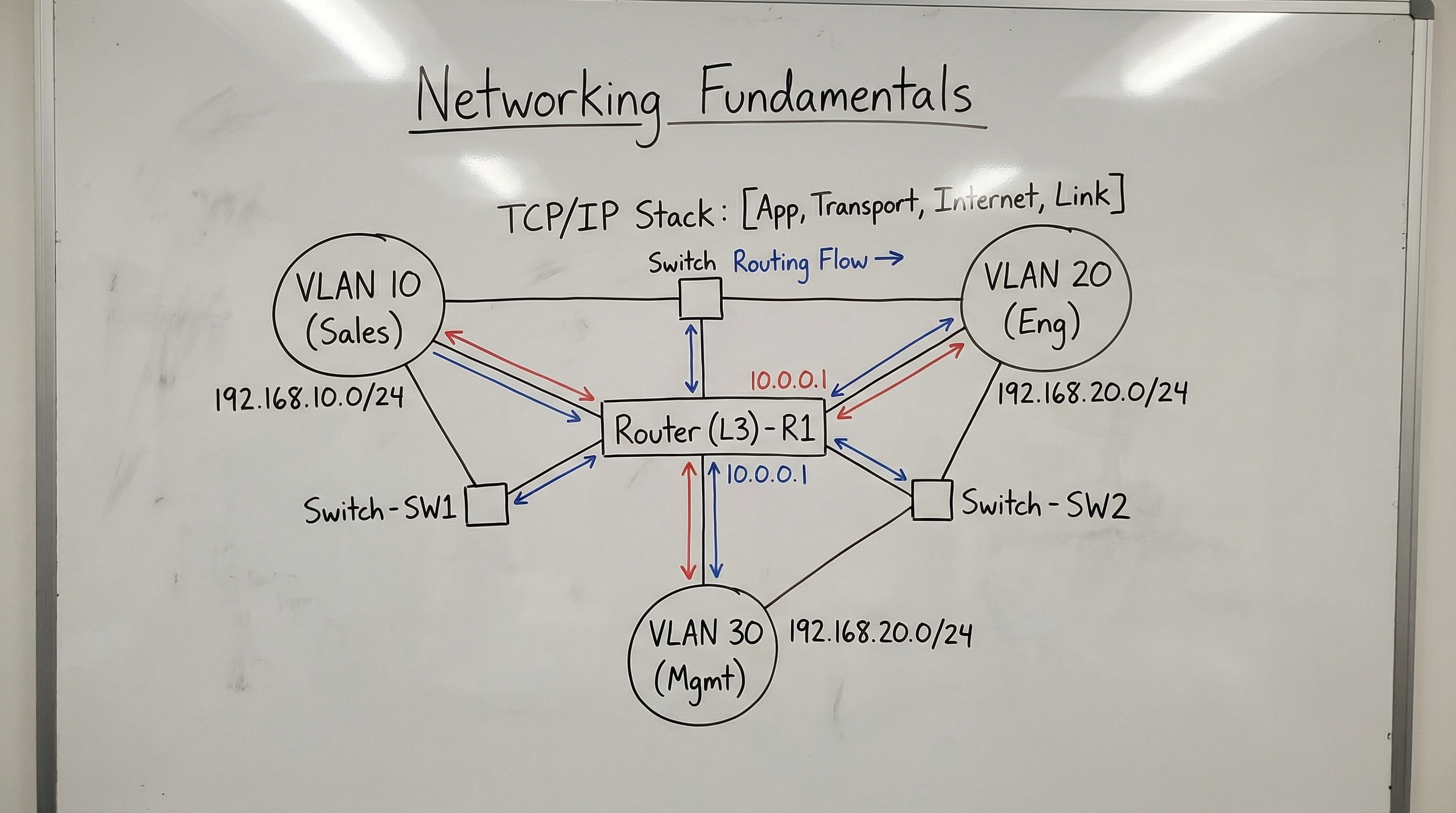
Most network engineer interviews combine theory, practical configuration, and scenario-based problem solving. Candidates should be ready for questions and lab exercises on:
- Layer 2/3 switching and routing (including VLANs, STP, OSPF, BGP)
- Subnetting and network design
- Firewall configuration and security segmentation
- Network monitoring and performance optimization
- Troubleshooting tools (Wireshark, SolarWinds, Nagios)
- Basic scripting for automation (Python, bash)
- Incident detection and real-time response
Behavioral questions often assess teamwork, communication, and the ability to work under pressure vital for roles that require both technical and people skills.
Step-by-Step Technical Interview Prep Roadmap
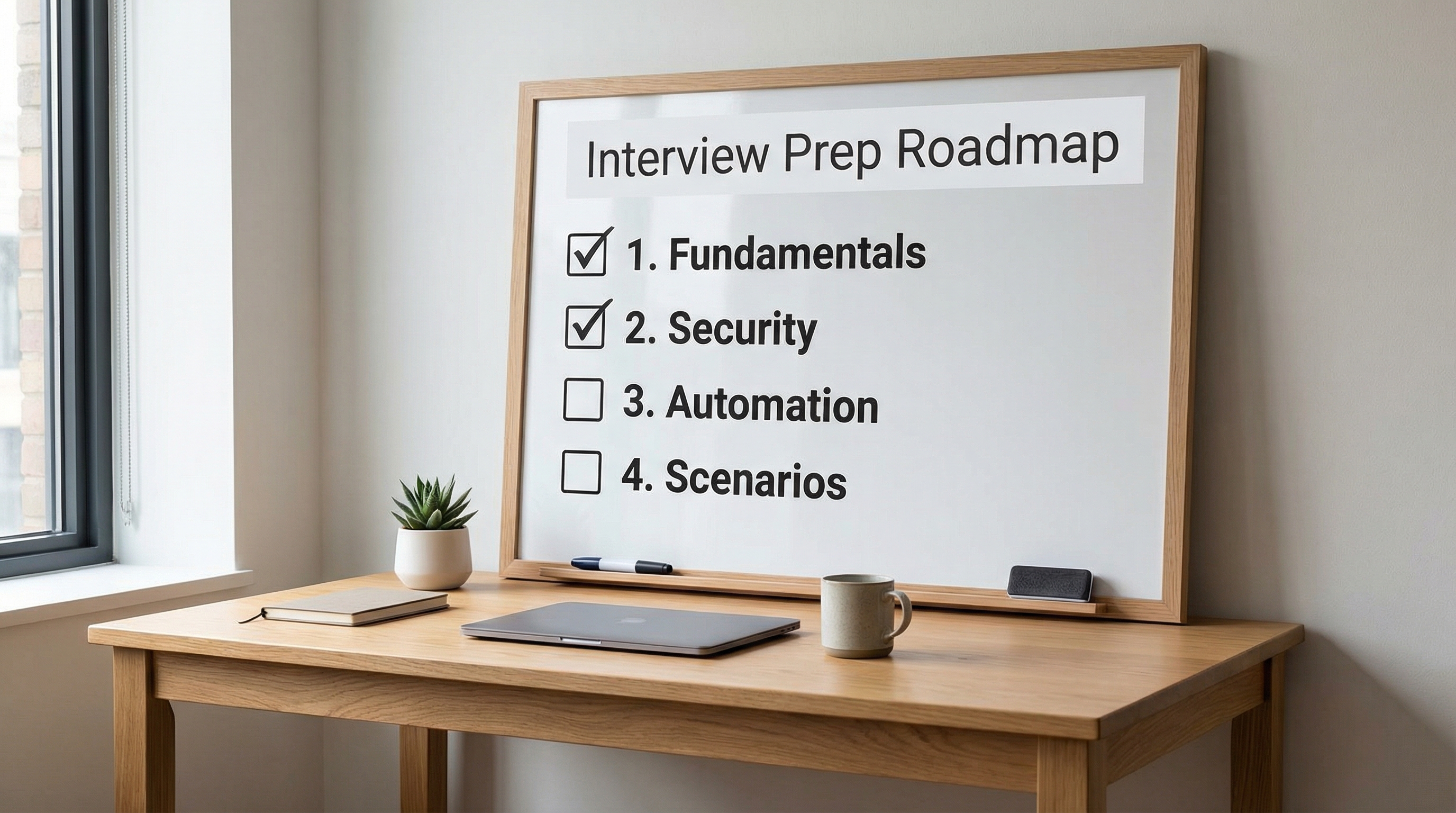
Breaking interview prep into focused steps ensures you build both the technical depth and confidence needed for success. Here is a proven four-week plan, inspired by industry trends and hands-on learning approaches at NGT Academy:
Week 1: Master Networking Fundamentals
- Review TCP/IP stack, subnetting, VLANs, and routing basics.
- Learn configuration of routers, switches, and access points using simulation tools (e.g., Cisco Packet Tracer, GNS3).
- Set up a home or virtual lab to practice installation and troubleshooting.
- Understand operating systems relevant to networking (Windows, Linux).
Week 2: Deep Dive into Security and Advanced Protocols
- Study firewalls, IDS/IPS, VPNs, and access control best practices.
- Explore advanced protocols: OSPF, BGP, IPv6, and VLAN trunking.
- Practice implementing encryption, segmentation, and secure remote access.
- Review common network attack vectors and defenses.
Week 3: Automation, Monitoring, and Optimization
- Learn basic scripting with Python for automating network tasks.
- Use monitoring tools (Nagios, Zabbix) to check network health and performance.
- Explore log management solutions (ELK Stack, Splunk).
- Practice optimizing networks for reliability and efficiency (load balancing, redundancy).
Week 4: Mock Interviews and Scenario Practice
- Participate in technical mock interviews, focusing on troubleshooting and real-world scenarios.
- Prepare for system design questions (e.g., how to build a highly available network for a growing company).
- Review behavioral and communication questions practice explaining solutions clearly.
- Reflect on feedback and reinforce weak areas.
How to Approach Scenario-Based and Behavioral Questions
Modern interviews often simulate actual network problems or ask candidates to design solutions for specific business requirements. To excel, use the STAR method (Situation, Task, Action, Result) when answering behavioral questions and walk through your troubleshooting steps methodically for technical scenarios.
- Example scenario: "A remote office loses network connectivity. How do you diagnose and resolve the issue?" Start by clarifying symptoms, checking physical connections, reviewing configuration logs, and isolating the fault step by step.
- Behavioral example: "Describe a time you worked under pressure to resolve an outage." Highlight teamwork, communication, and the technical process you followed.
Certifications and Practical Experience: The Key Differentiators
While some employers require degrees, most prioritize hands-on skills and industry certifications. The NGT Academy Network Engineer Program + Cybersecurity Accelerator prepares you for in-demand certifications like CCNA and equips you with real lab experience. These credentials and practical skills are essential for standing out in technical interviews and advancing to specialized roles in network security or architecture.
Building Your Home or Virtual Lab
Set up a lab using software like GNS3 or Cisco Packet Tracer to practice:
- Configuring VLANs, routing, and wireless networks
- Implementing firewalls and VPNs
- Automating repetitive tasks with Python scripts
- Monitoring traffic and simulating outages for troubleshooting drills
Advancing Your IT Career: From Entry-Level to Senior Network Engineer
Technical interview prep for network engineers is not just about landing your first job it is about building a foundation for career growth. Start with entry-level certifications and skills, then progress to advanced credentials (CCNP, CISSP, CEH) and specialization in areas like network security or automation. Continuous learning and hands-on experience are key. Many successful network engineers started as career changers or in help desk roles and advanced through dedication to practical upskilling.
Career Progression Pathways
- Junior Network Engineer (focus on support, monitoring, basic configuration)
- Network Engineer (design, implement, secure complex networks, lead troubleshooting)
- Senior Network Engineer/Architect (strategic planning, project leadership, advanced security)
For more on how NGT Academy supports your career journey and mission to help 1 million people get tech jobs by 2030, visit our Mission page.
Best Practices for Acing Your Network Engineer Interview
- Practice daily in a lab environment employers favor candidates with hands-on troubleshooting skills.
- Stay current with evolving technologies such as SD-WAN, wireless protocols, and network automation.
- Prepare real-world examples of how you optimized or secured a network, even from home labs or projects.
- Work on communication show you can explain technical issues clearly to all stakeholders.
- Review common interview topics: subnetting, routing, firewalls, VLANs, scenario-based troubleshooting, and behavioral questions.
FAQ
What topics should I focus on for technical interview prep as a network engineer?
Prioritize networking fundamentals (TCP/IP, routing, switching), security practices (firewalls, VPNs), troubleshooting, and automation basics. Hands-on labs and scenario-based problem solving are essential.
How do I practice for scenario-based network engineer interview questions?
Set up a home or virtual lab to simulate real-world issues, practice troubleshooting, and work through case studies. Mock interviews and peer feedback can help you refine your approach.
Which certifications help with landing a network engineer job?
Certifications like Cisco CCNA, CCNP, and security credentials such as CISSP or CEH demonstrate your expertise and are highly valued by employers. NGT Academy's programs prepare you for these certifications with hands-on training.
Is hands-on experience more important than a degree for network engineering roles?
For many employers, practical skills and certifications matter more than a formal degree. Building a portfolio of real projects and labs is key to standing out in interviews.
How does NGT Academy help with technical interview prep for network engineering careers?
NGT Academy offers structured, skills-based training, live labs, mentorship, and career coaching to help you master technical and soft skills needed for interview success and career advancement.