
Career Change Into Tech: Steps to Land a Role in Networking, IT, and Cybersecurity
Career Change Into Tech: Steps for Networking, IT, and Cybersecurity Success


If you are considering a career change into tech, especially within networking, IT, or cybersecurity, you are not alone. More adults than ever are seeking hands-on training that leads directly to employment in these high-demand fields. This guide is for career changers, veterans, and early-career IT professionals who want a clear, practical roadmap to successfully enter or accelerate within the tech industry.
Transitioning into a tech career means building real-world, hands-on skills, creating a portfolio of projects, and gaining certifications that employers actually value. With the right approach, you can move from a non-technical background or an entry-level IT role to a rewarding, future-proof position in just months, not years.
Why Choose a Tech Career Now?
The tech industry is experiencing unprecedented growth, with millions of unfilled roles around the world. Employers in sectors like healthcare, finance, government, and retail are seeking professionals who can support digital transformation, cybersecurity, and IT infrastructure. Plus, most entry-level tech roles do not require a traditional degree; employers prioritize skills, hands-on experience, and adaptability.
Switching to tech offers strong job security, above-average starting salaries, and access to remote or hybrid work. In 2026, over 60% of new job opportunities are expected to be in digital and tech-related fields. This makes now an ideal time to pursue a career change into tech.
To successfully change careers into tech, start by choosing a path that matches your interests, then build core skills through structured, hands-on training. Gain certifications, create a portfolio of projects, and network with professionals in your target field to maximize your job prospects.
What Are the Most Accessible Tech Roles for Career Changers?
Not all tech jobs require coding or a computer science degree. Here are several popular and accessible paths for adults making a career change into tech:
- Cybersecurity Analyst: Protects networks and systems from cyber threats. Entry-level roles rely on certifications like CompTIA Security+ and hands-on labs to demonstrate skills.
- IT Support / Help Desk: Acts as the first line of defense for technical problems. A great entry point for those new to IT.
- Network Engineer: Maintains and secures computer networks. Certifications like CompTIA Network+ and Cisco CCNA are highly valued.
- Data Analyst: Uses tools like Excel, SQL, and Power BI to analyze business data and support decision-making.
- QA Tester: Ensures the quality of software through testing, often with minimal coding required.
- Business Analyst and Project Coordinator: Bridges the gap between technical teams and business needs, ideal for those transitioning from non-IT roles.

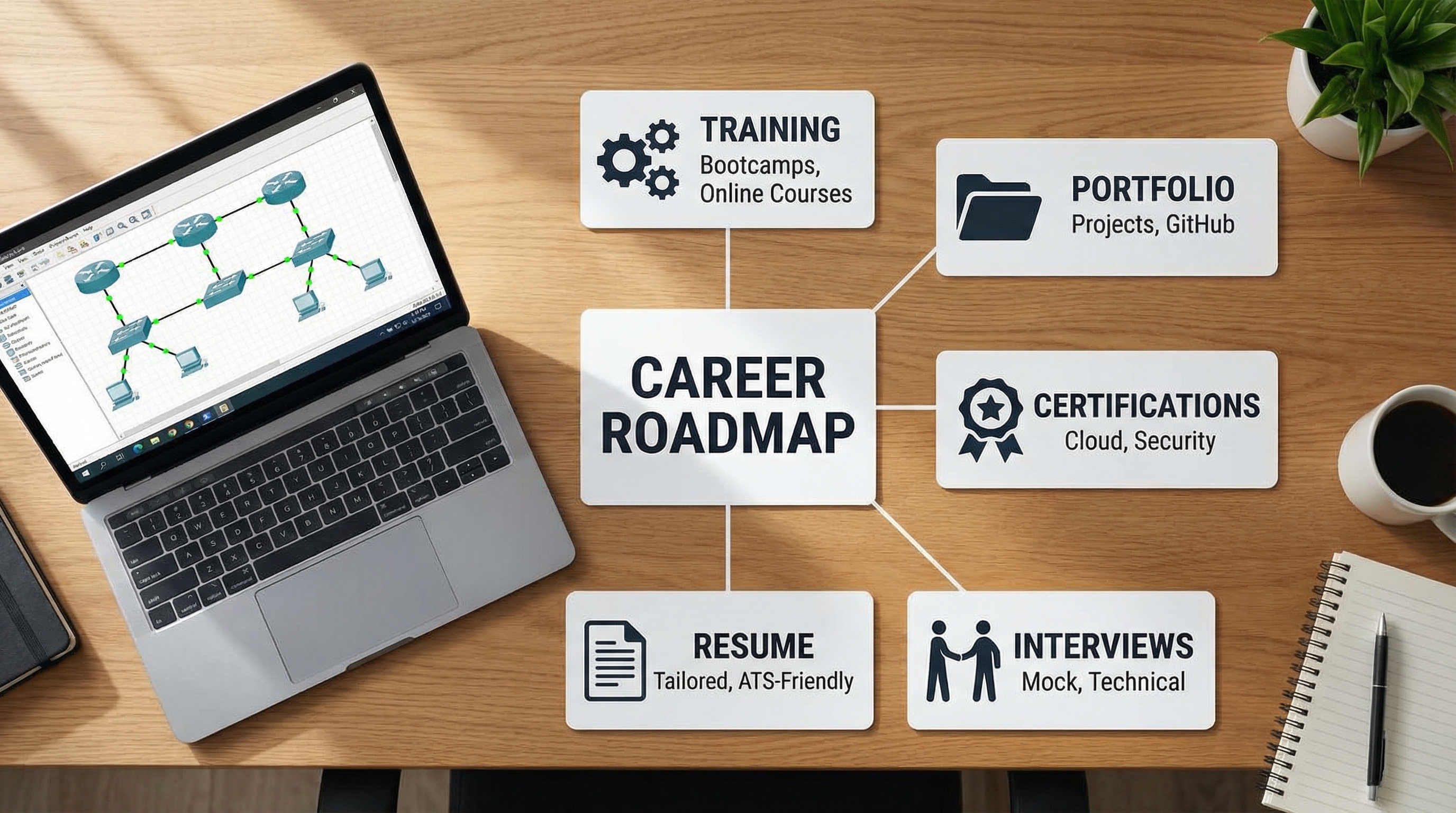
How to Start Your Career Change Into Tech: The Step-by-Step Roadmap
1. Self-Assessment and Goal Setting
Begin by clarifying your motivation. Are you seeking higher pay, remote work, or more meaningful challenges? Identify your transferable skills such as communication, problem-solving, or project management, as these are highly valued in tech. Use career assessments or speak with a mentor to pinpoint the best fit for your background and interests.
2. Research Target Roles
Explore specific job descriptions in networking, IT, and cybersecurity. Conduct informational interviews or attend online meetups to understand day-to-day responsibilities and required skills. This helps you avoid the common mistake of applying for roles you do not fully understand. Reading about cybersecurity can also provide clarity.
3. Build Core Skills with Structured Training
Choose a hands-on, job-focused training program that offers mentorship and real-world labs. For example, the Network Engineer Program + Cybersecurity Accelerator at NGT Academy combines technical instruction with practical projects and career coaching. Programs like these accelerate your learning and help you build a portfolio that showcases your abilities to employers.
4. Create a Job-Ready Portfolio
Employers increasingly want to see proof of your skills, not just certificates. Build a portfolio with lab work, case studies, network diagrams, or project documentation. Even non-coding roles benefit from tangible examples, such as security incident reports or network troubleshooting exercises.
5. Earn Industry Certifications
Certifications like CompTIA A+, Network+, Security+, or CCNA serve as trusted signals to employers that you have mastered essential skills. Choose certifications aligned with your chosen path and supplement them with hands-on project work.
6. Optimize Your Resume and LinkedIn Profile
Use a skills-based or combination resume format to highlight your new technical skills and transferable abilities. Reframe previous achievements in language relevant to IT or cybersecurity. Update your LinkedIn profile with completed projects, certifications, and clear statements about your career goals. Learning how to write an IT resume can improve your results.
7. Network and Prepare for Interviews
Join online forums, LinkedIn groups, and local meetups focused on IT and cybersecurity. Networking is essential for learning about hidden job opportunities and gaining referrals. Prepare for interviews by practicing both technical questions and behavioral responses, using frameworks like STAR (Situation, Task, Action, Result).
8. Apply Strategically and Stay Persistent
Apply for roles that closely match your new skills and portfolio. Track your applications and seek feedback to improve your approach. Remember, most successful career transitions take 6 to 12 months—staying consistent is key. You can also review steps for going from help desk to network engineer for added guidance.
Common Mistakes to Avoid When Switching to Tech
- Jumping into random online tutorials without structure.
- Neglecting hands-on project work in favor of theory or excessive certifications.
- Applying for jobs without understanding the actual responsibilities.
- Giving up too soon when job searching; persistence is crucial.
How Long Does It Take to Change Careers Into Tech?
Most adults can complete foundational training and launch a new tech career in 6 to 12 months. Some motivated learners transition in as little as 3 months with intensive study. Specializing in fields like cybersecurity or networking may take additional time but often leads to higher salaries and more advancement opportunities.
What Are the Salary Expectations in Entry-Level Tech Roles?
Salaries vary by region and specialization, but many entry-level tech roles offer higher-than-average compensation and strong growth potential.
Building Confidence and Overcoming Challenges
Feeling overwhelmed or experiencing imposter syndrome is normal for career changers. Focus on your transferable skills and real progress, not just gaps. Bridge roles—like technical support or customer success—can provide a smoother entry point. Remember, your unique background can be an asset, especially in roles that blend business and technology.
Leverage AI and Soft Skills for a Competitive Edge
AI tools are now a standard part of IT and cybersecurity workflows. Employers appreciate candidates who can use AI for analysis, documentation, or troubleshooting, even without deep technical expertise. Soft skills like communication, adaptability, and teamwork are also critical for success and advancement in tech roles.
Ready to Take the Next Step?
NGT Academy specializes in helping adults, veterans, and non-traditional students make a successful career change into tech. Our Network Engineer Program + Cybersecurity Accelerator is designed to give you hands-on skills, industry certifications, and one-on-one career coaching for roles in IT, networking, and cybersecurity.
Want to know more about our mission to help 1 million people achieve tech jobs by 2030? Visit our mission page to see how NGT Academy is making tech careers accessible for everyone.