
SDN Software Defined Networking Explained: Practical Uses in Networking and Cybersecurity
SDN Software Defined Networking Explained: Real-World Applications


For anyone looking to break into IT, enhance their networking skills, or transition into a cybersecurity role, understanding SDN software defined networking is now essential. This technology is transforming how organizations build, secure, and adapt their networks. In this guide, we provide SDN software defined networking explained for career changers, tech enthusiasts, and entry-level IT professionals who want a clear, practical foundation with real-world insights.
What Is SDN and Why Does It Matter?
SDN, or software defined networking, is an approach that separates network control from underlying hardware. This separation enables centralized, software-based management and allows organizations to adapt, secure, and scale their networks quickly and consistently. For IT and cybersecurity professionals, this means less manual work, fewer errors, and better protection against ever-evolving threats.
SDN software defined networking explained in simple terms: SDN moves network decision-making from individual devices to a centralized controller, making the network more flexible, programmable, and secure. This shift allows IT teams to automate policies, enforce security at scale, and respond rapidly to incidents or changes.
How Does SDN Work? The Core Architecture
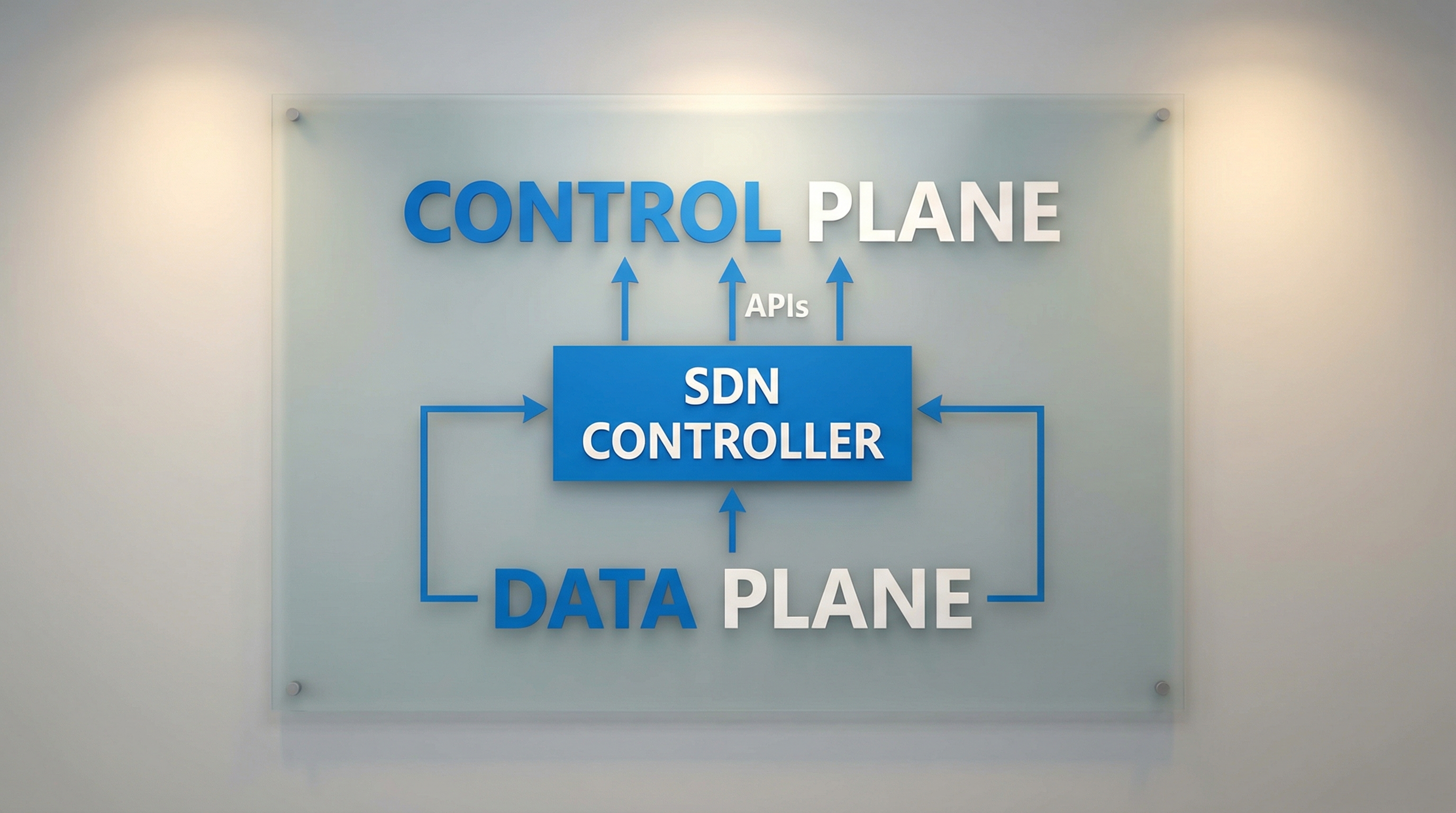
Traditional networks integrate both the control plane (decision logic) and data plane (traffic forwarding) into each device, like a router or switch. SDN changes this by moving the control plane to a central controller, while devices focus on forwarding data as instructed. This architectural decoupling is what makes SDN so agile and programmable.
- SDN Controller: The brain of the network, where all decisions about traffic flow, security, and policies are made.
- Southbound APIs (e.g., OpenFlow): These protocols allow the controller to communicate with network devices, pushing rules and gathering real-time status updates.
- Northbound APIs: These connect the controller to management and security applications, enabling automation and integration with other IT tools.
- Infrastructure Layer: The switches and routers that forward traffic based on the controller’s instructions.
Through this setup, administrators can manage the entire network from a single console, rolling out policies instantly and eliminating the need to manually configure each device.
SDN in Action: Real-World Applications in Networking
SDN’s programmability and centralized control are more than just theoretical advantages. Here’s how modern organizations are applying SDN to solve real problems:
1. Automated Network Provisioning
When new users, devices, or applications need network access, SDN can onboard them automatically, applying correct policies and segmentation without manual intervention. This is especially valuable for organizations scaling quickly or dealing with dynamic environments.
2. Microsegmentation and Zero Trust
SDN enables microsegmentation dividing the network into isolated segments for individual workloads, users, or teams. This reduces the risk of lateral movement by attackers, a key principle of zero trust security. For example, if a device is compromised, SDN can instantly isolate it from the rest of the network.
3. Vendor-Neutral Management
Thanks to open standards like OpenFlow, SDN allows organizations to mix and match hardware from different vendors, reducing costs and avoiding lock-in. Policies can be enforced uniformly, regardless of the underlying equipment.
How Does SDN Improve Cybersecurity?
Security is one of SDN’s most powerful use cases. With centralized control and automation, SDN brings several advantages to modern cyber defense:
- Real-Time Threat Response: Security tools can signal the SDN controller to immediately reconfigure the network, blocking, quarantining, or inspecting malicious traffic in seconds.
- Consistent Policy Enforcement: With policies managed centrally, the risk of human error and misconfiguration is greatly reduced. This consistency is critical for compliance and auditability.
- Faster Incident Containment: If suspicious activity is detected, SDN can isolate affected segments instantly, limiting potential damage and reducing dwell time for attackers.
- Automated Security Provisioning: As new devices or applications are added, SDN ensures they receive the correct security controls without delay.
These capabilities are essential for defending against threats like DDoS attacks, ransomware, and insider threats, all of which are on the rise in 2026. For foundational context, understanding ARP helps reinforce knowledge of how devices communicate at a basic level, making resources like what is ARP address resolution protocol explained valuable for beginners.
Key Components and Tools in Modern SDN
To work effectively with SDN, IT professionals need to understand the major components and supporting tools:
- SDN Controllers: Examples include OpenDaylight and OpenContrail. These platforms enforce policies, integrate with security tools, and manage device configurations.
- APIs and Protocols: OpenFlow (for southbound communication), NETCONF/YANG (for device configuration), and proprietary APIs enable automation and interoperability across devices and software.
- Security and Orchestration Tools: Integration with SIEM, identity management, and incident response platforms is common, allowing for automated detection and response.
Hands-on experience with these tools is increasingly expected for networking and cybersecurity roles. Understanding broader networking fundamentals that support SDN is also essential, as described in the FSNA full stack network associate definition.
Risks and Challenges of SDN
While SDN brings significant benefits, it also introduces new risks that professionals must understand and mitigate:
Controller as a Single Point of Failure
The SDN controller is a high-value target. If compromised, attackers could disrupt or control the entire network. Redundancy, segmentation, and strict access controls are essential.
API and Automation Security
Weak authentication on APIs can allow attackers to inject malicious policies or reroute traffic. Best practices include enforcing multi-factor authentication, role-based access, API request validation, and continuous monitoring.
Misconfiguration Cascades
Centralized management means a single bad policy can instantly affect thousands of systems. Rigorous change management, automated validation, and rollback procedures are critical to prevent widespread outages.
Best Practices for Hardening SDN Environments
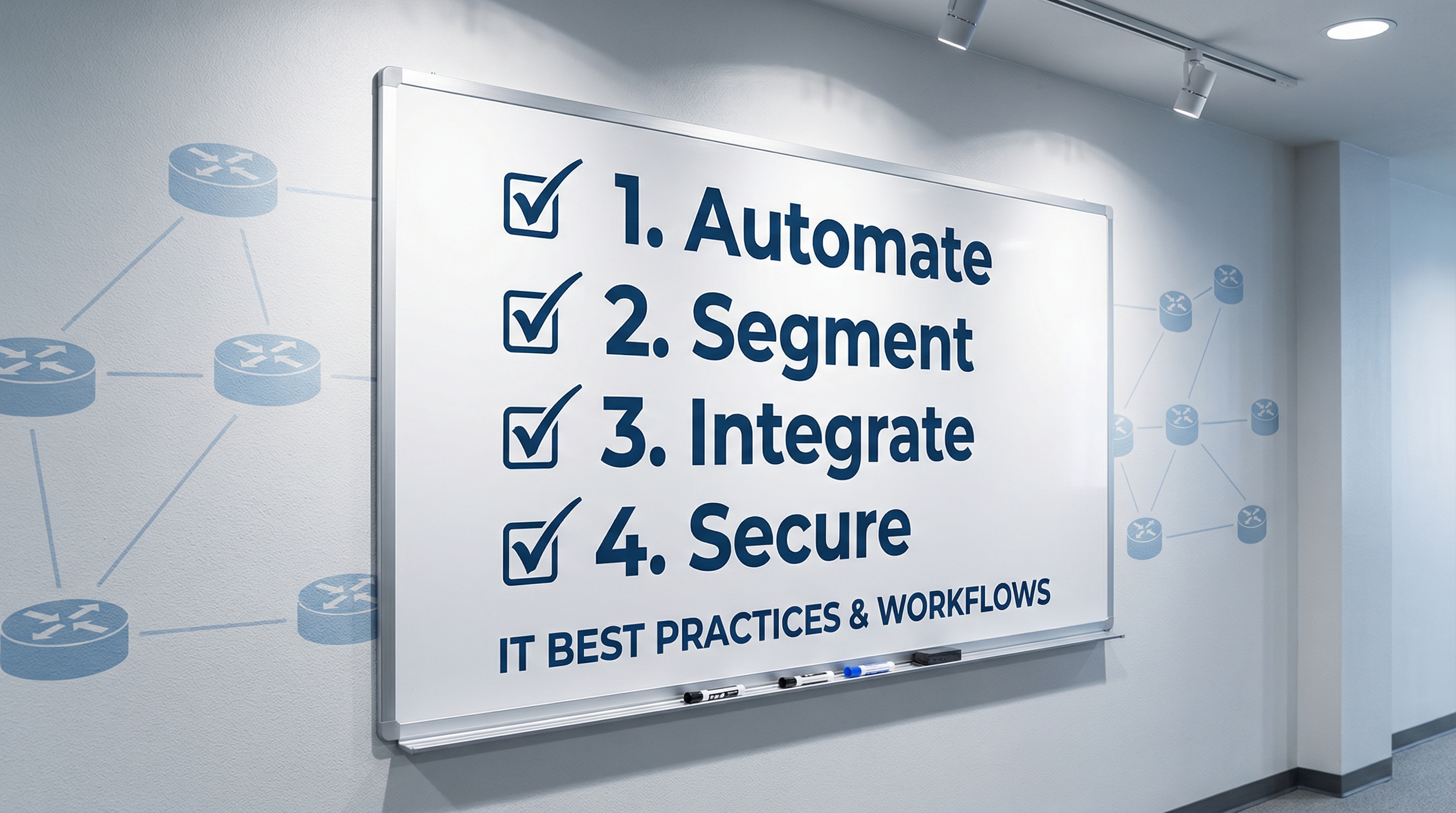
- Restrict controller access to dedicated, segmented networks.
- Require strong authentication and least-privilege roles for administrators.
- Encrypt all communications between controllers and devices (northbound and southbound APIs).
- Enable log monitoring, alerting, and regular audits of all SDN components.
- Patch SDN controllers and virtual appliances promptly to address vulnerabilities.
By following these practices, organizations can reap SDN’s benefits without exposing themselves to unnecessary risk. To strengthen your foundational knowledge for these concepts, review supporting topics like virtualization, as explained in virtualization basics for network engineers.
How SDN Skills Support Career Growth in 2026
With enterprises rapidly adopting software-defined architecture, the need for professionals with SDN skills has never been higher. Entry-level IT staff, network engineers, and those transitioning into cybersecurity can advance faster by mastering SDN concepts such as:
- Network automation and centralized management
- Microsegmentation and zero trust implementation
- Security integration and rapid incident response
- API usage and device interoperability
NGT Academy’s programs are designed to help you build these skills through hands-on labs, mentorship, and career coaching, giving you a competitive edge in the job market.
Ready to Start Your SDN Journey?
If you want to launch or accelerate your career in networking and cybersecurity, mastering SDN is a smart move. Explore our Network Engineer Program + Cybersecurity Accelerator for expert-led training, practical labs, and personalized career support.
Still have questions about eligibility, financing, or next steps? Visit our FAQ page for detailed answers and guidance.
FAQ
What is SDN software defined networking explained for beginners?
SDN software defined networking is a technology that separates network management from hardware, enabling centralized, programmable control for more agile and secure networks.
How does SDN improve network security?
SDN centralizes policy enforcement, enables automation, and allows real-time responses to threats, reducing the chance of misconfiguration and speeding up incident containment.
What are the main components of an SDN architecture?
The main components are the SDN controller (central management), southbound APIs (controller-to-device communication), northbound APIs (integration with apps), and underlying network devices.
Why is SDN important for cybersecurity careers?
SDN skills are increasingly required for IT and cybersecurity professionals, as organizations rely on programmable networks and automation to defend against modern threats.
How do I get hands-on SDN training?
NGT Academy offers practical courses and labs within its Network Engineer Program + Cybersecurity Accelerator, helping you develop real-world SDN and cybersecurity skills.