
FSNA Full Stack Network Associate Definition: Your Pathway to Hands-On IT Success
FSNA Full Stack Network Associate Definition: Job-Ready IT Training

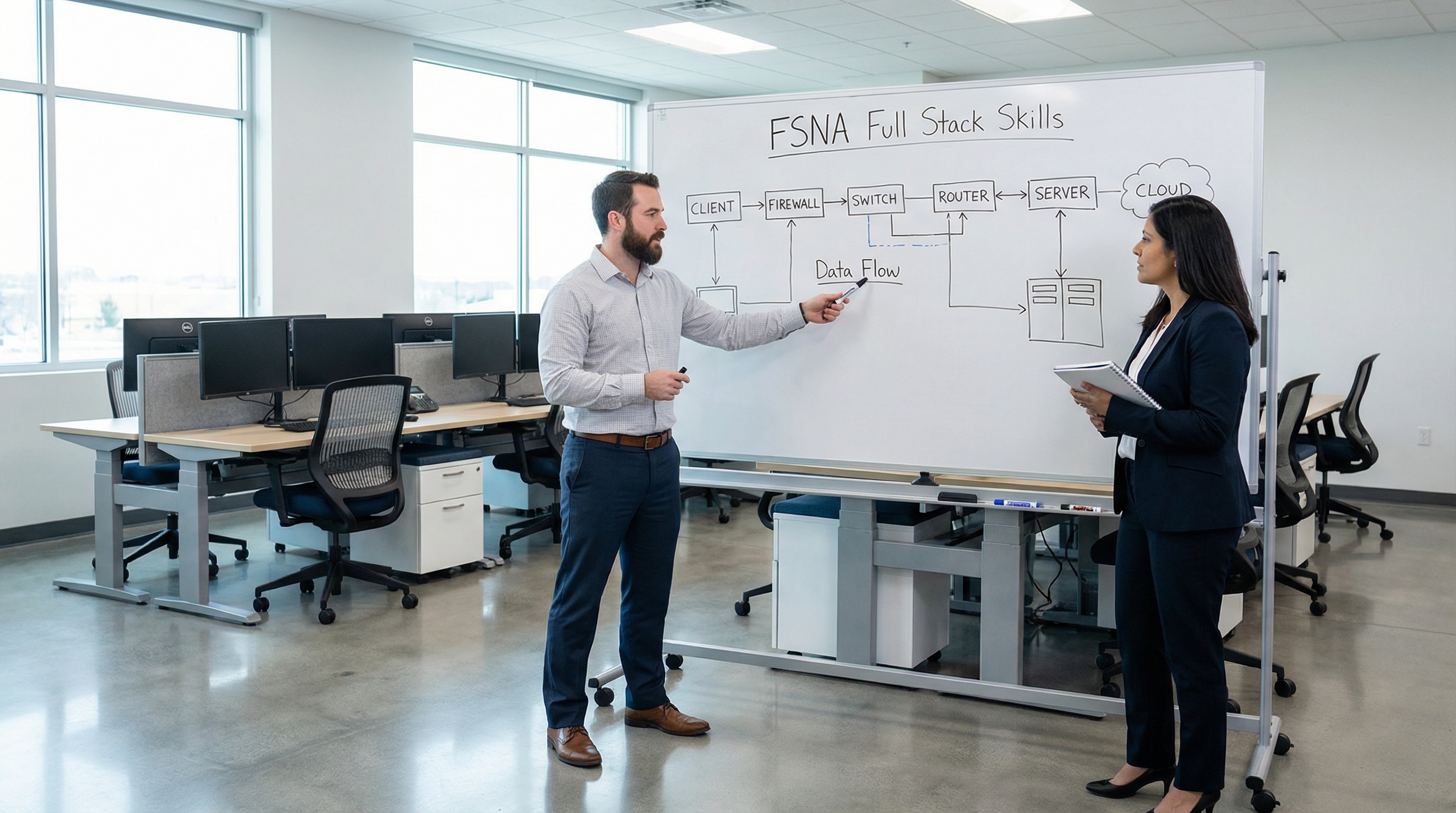
Are you considering a career in IT networking or cybersecurity but feel overwhelmed by the vast array of certifications and training options? If you are an adult career changer, military veteran, or an entry-level IT professional looking to move up, understanding the FSNA full stack network associate definition and its benefits can help you make informed decisions about your next steps. This guide explains what the FSNA certification is, how it differs from traditional IT certifications, and why it is a powerful launchpad for real-world tech roles.
The Full Stack Network Associate (FSNA) certification is a practical, hands-on credential that verifies your ability to configure, secure, and troubleshoot modern networks across routing, switching, cybersecurity, wireless, voice over IP, and automation. FSNA is designed to make you job-ready with the real skills employers demand in 2026 and beyond.
What Is the FSNA Full Stack Network Associate Certification?
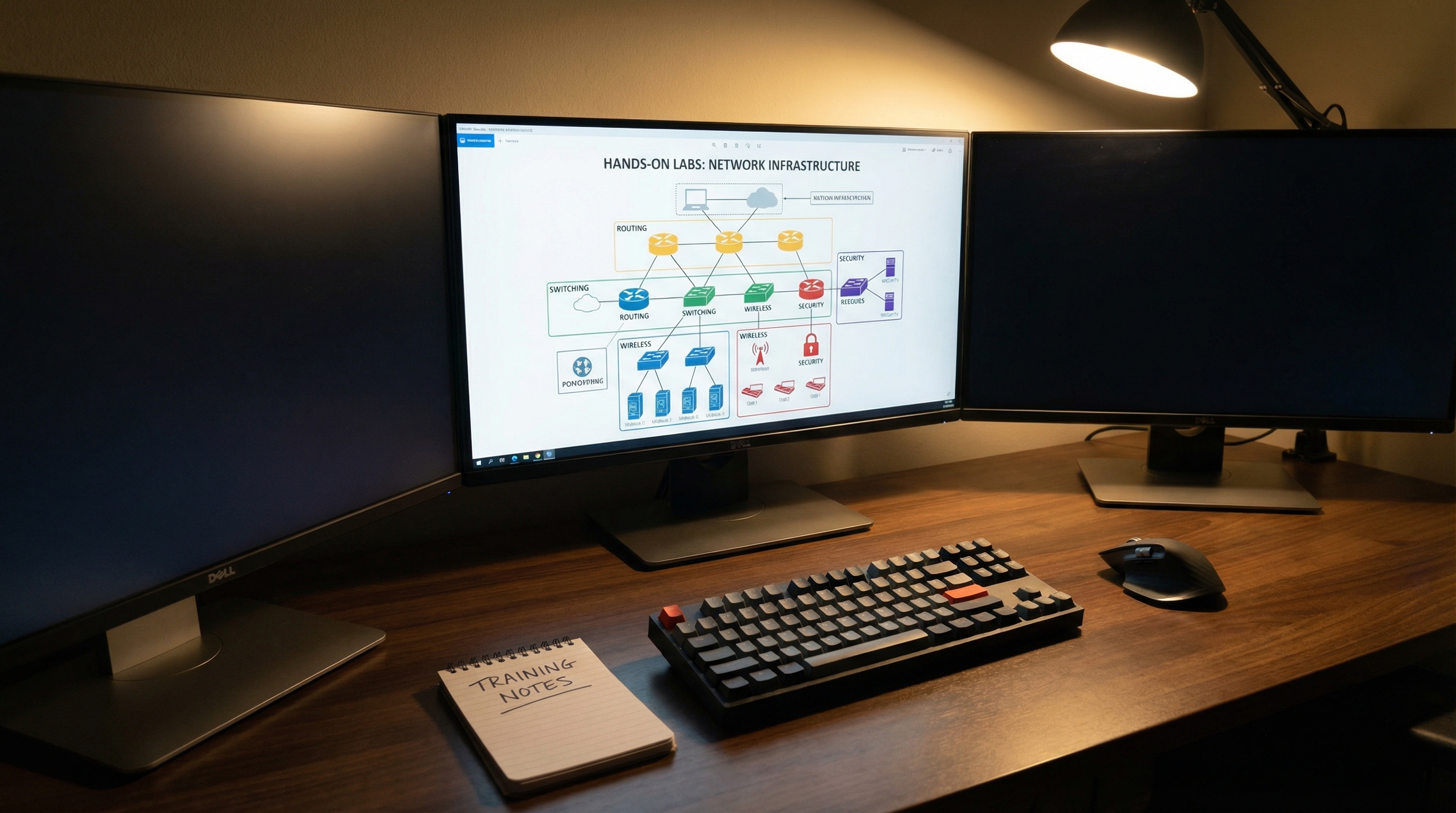
The FSNA full stack network associate definition centers on a comprehensive, skills-based certification that prepares adults for in-demand IT networking and cybersecurity roles. Unlike traditional certifications that focus mainly on theoretical knowledge, FSNA blends live instruction, hands-on labs, and mentorship to ensure graduates can perform in real job environments.
Why FSNA Stands Out Among IT Certifications
Many tech certifications test your ability to memorize facts or pass multiple-choice exams. However, employers frequently cite a gap between certification and practical job performance. FSNA addresses this by making hands-on experience the core of its training. Developed by Air Force veteran instructors with experience training over 1,000 engineers, the FSNA curriculum covers more than 100 associate-level skills, including:
- Routing and switching fundamentals
- Network security and threat mitigation
- Wireless networking and management
- Voice over IP (VoIP) configuration
- Network automation basics
- Network administration and troubleshooting
FSNA students also receive integrated training for the Cisco CCNA, one of the industry’s most recognized credentials, as part of the program. This aligns well with insights shared in is CCNA certification worth it in 2025.
How Does FSNA Hands-On Training Work?
The FSNA program is built around a series of live online classes, interactive labs, and mentorship sessions. You do not need prior IT experience to begin. Instead, you will learn by doing, with structured support every step of the way. Key elements include:
- Mentorship from seasoned network engineers
- Weekly live group coaching for troubleshooting and career guidance
- Real-world lab exercises simulating workplace scenarios
- Community and peer support to foster collaborative learning
- Virtual skills check (FSNA-V) to validate your hands-on abilities
This approach ensures that you do not just know the theory you can build, configure, secure, and troubleshoot a modern LAN with routing, switching, wireless, VoIP, and security components. This hands-on style is further explored in hands on IT training vs traditional degree.
Who Should Pursue the FSNA Certification?
The FSNA certification is ideal for:
- Career changers seeking a fast track into IT networking or cybersecurity
- Veterans and service members looking to leverage their discipline and problem-solving skills in civilian roles
- Entry-level IT professionals aiming to progress from help desk or support to engineering positions
- Tech enthusiasts without a formal degree who want structured, skills-based training
No prior degree or IT experience is required, just a determination to learn and a commitment to completing hands-on assignments. The FSNA program is structured to be accessible, flexible, and supportive for adults balancing work, family, or other commitments.
FSNA vs. Traditional IT Certifications: What Makes It Different?
Unlike legacy certifications that often rely on rote memorization and theoretical study, FSNA is purpose-built to reflect actual workplace demands. Here’s how FSNA compares:
| Feature | FSNA | Traditional Certification |
|---|---|---|
| Focus | Hands-on, job-ready skills | Theoretical knowledge |
| Method | Live labs, mentorship, projects | Self-study, multiple-choice exams |
| Verification | Virtual skills check (FSNA-V) | Written exam only |
| Community | Active support, group learning | Usually solo study |
| Career Coaching | Included | Rarely included |
This blended model gives you an edge when applying for jobs because you can demonstrate real, validated skills not just a certification badge.
What Skills Are Covered in the FSNA Curriculum?
FSNA is called "full stack" because it spans every layer of network technology and security relevant to today’s enterprise environments. Some of the core areas include:
- Network architecture and design
- Implementing routing protocols and VLANs
- Securing network devices and data
- Wireless network setup and optimization
- VoIP technology and deployment
- Network automation with scripting basics
- Incident response and troubleshooting methodology
Each module combines theory with lab-based practice, ensuring you graduate not just with knowledge but with proven, hands-on ability.
Success Stories: Real People, Real Career Change
FSNA alumni have achieved impressive results, often transitioning from unrelated fields into high-paying tech roles. For example:
- Marcus Mapes transitioned from a $32,000 military salary to an $85,000 network engineer position after earning his FSNA certification.
- Chris Mendez left a help desk role for a 50% salary increase as a Network Administrator.
- Other alumni have moved into positions at companies like Google, often without prior IT experience.
These stories highlight FSNA’s effectiveness for career changers and non-traditional learners, supporting NGT Academy’s mission to help one million people launch tech careers by 2030. Learn more about our mission here. This aligns with journeys shared in zero experience to network engineer in 18 months.
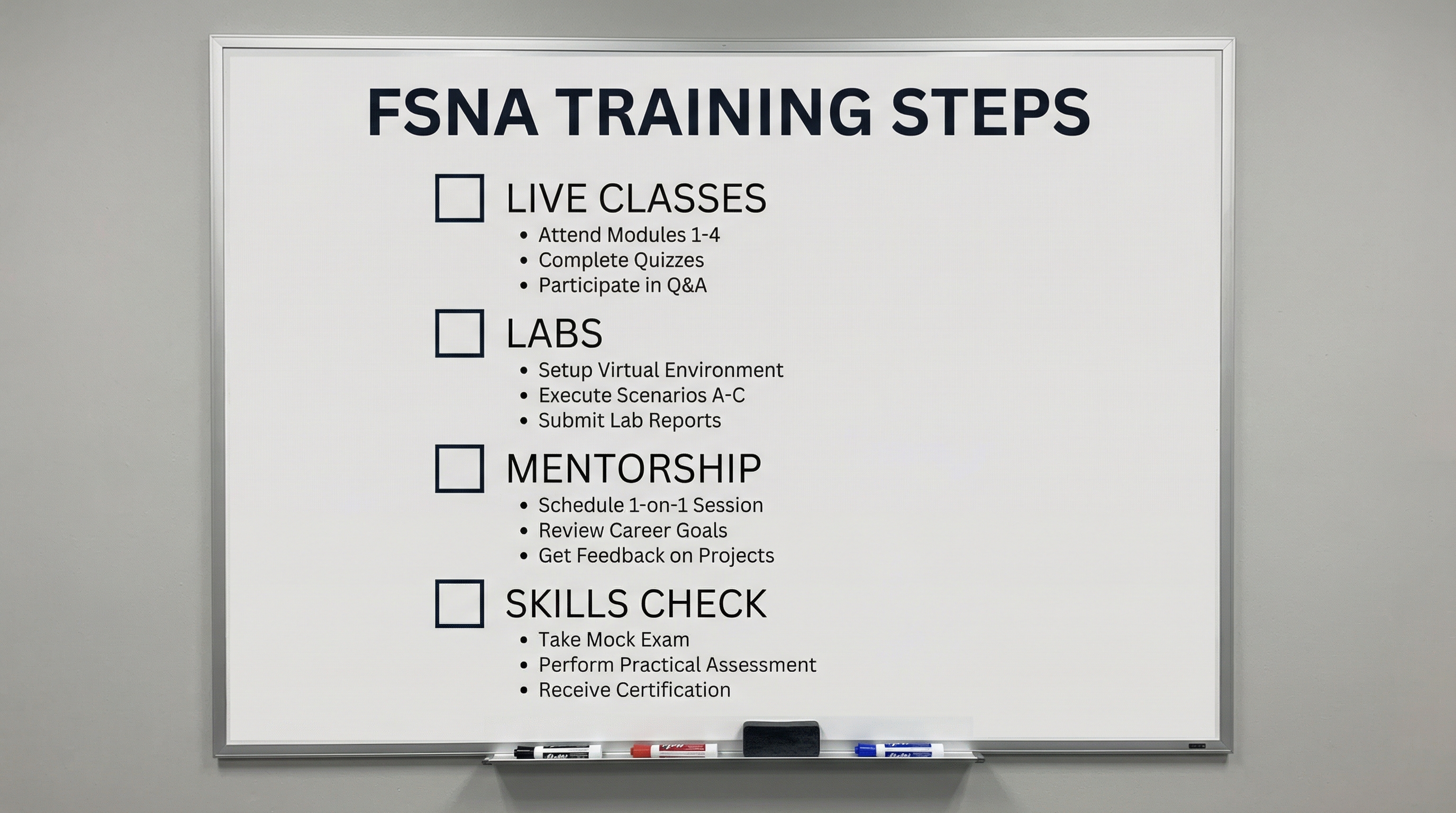
How to Get Started: Steps to Earning Your FSNA
- Evaluate Readiness: You do not need IT experience, but you should be motivated and ready to learn.
- Apply for the Program: Start with the Network Engineer Program + Cybersecurity Accelerator for a comprehensive track. Explore the program here.
- Attend Live Online Classes: Engage with instructors and peers through scheduled virtual sessions.
- Complete Labs and Assignments: Practice hands-on skills in real scenarios, receiving feedback and support.
- Participate in Mentorship and Coaching: Leverage weekly group coaching to overcome challenges and plan your job search.
- Pass the FSNA-V Skills Check: Demonstrate your practical abilities in a virtual skills assessment.
- Leverage Career Services: Receive help with resumes, interviews, and employer connections to land your first role.
Is FSNA Right for You?
If you want more than a theoretical credential and are serious about entering or advancing in IT networking and cybersecurity, FSNA offers a structured, supportive pathway. Whether you are seeking a career transformation, a salary boost, or a way to gain hands-on skills without a four-year degree, this program is designed for you.
Still have questions about eligibility, financing, or program structure? Visit our FAQ page for detailed answers and next steps.
FAQ
What is the FSNA full stack network associate definition?
The FSNA full stack network associate definition refers to a certification that verifies hands-on ability to configure, manage, and secure modern networks across routing, switching, wireless, VoIP, and security, designed to make you job-ready for IT and cybersecurity roles.
What skills will I learn in the FSNA program?
You will master network architecture, routing and switching, cybersecurity fundamentals, wireless networking, VoIP, network automation basics, and troubleshooting in real-world scenarios.
Do I need prior IT experience to enroll in FSNA?
No, FSNA is open to motivated learners from any background; no previous IT experience or degree is required.
How is FSNA different from traditional IT certifications?
FSNA emphasizes practical, hands-on labs, mentorship, and real-world skill validation instead of focusing only on theory or multiple-choice exams.
What kinds of jobs can FSNA graduates pursue?
FSNA graduates are prepared for roles such as Network Engineer, Network Administrator, Cybersecurity Analyst, and IT Support Specialist, among others.