
Mastering Time Management for IT Trainees Studying from Home: Achieve Balance, Boost Productivity, and Grow Your Tech Career
Time Management for IT Trainees Studying from Home | NGT Academy

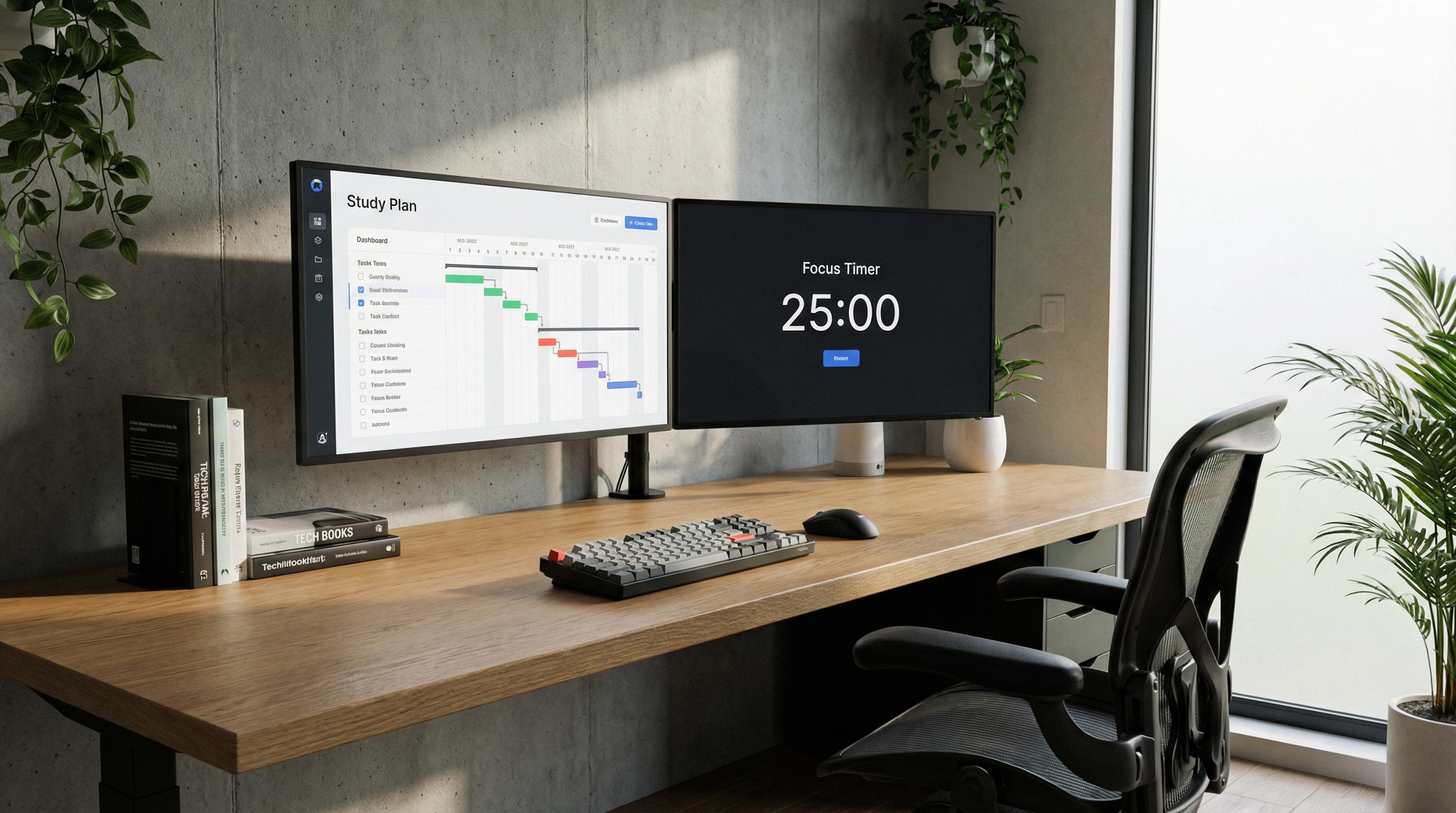
For aspiring IT professionals, career changers, and veterans training for new roles in networking or cybersecurity, learning from home can be both a privilege and a challenge. The freedom to set your own schedule brings flexibility, but it also demands discipline. This article explores actionable strategies for time management for IT trainees studying from home, with a focus on building lasting work-life balance, excelling in remote roles, and supporting your personal growth in the tech industry.
Effective time management for IT trainees studying from home means setting clear routines, prioritizing tasks, leveraging digital tools, and maintaining healthy boundaries. These habits help you balance coursework, personal life, and the unique demands of remote IT roles, so you can learn faster, avoid burnout, and confidently pursue career advancement.
Why Is Time Management Essential for Remote IT Trainees?
Studying IT or cybersecurity online often means juggling self-paced learning, live virtual labs, and personal commitments. Without the physical boundaries of traditional classrooms or offices, it’s easy to slip into inefficient patterns—either overworking or losing focus. This can slow your progress, affect your well-being, and make it harder to transition into remote IT roles where self-management is a must.
How Can You Build an Effective Routine?
Establishing a structured daily schedule is the foundation of time management for IT trainees studying from home. Define clear start and end times for your study sessions. Use digital calendars or scheduling apps to block out learning, project work, and downtime. Aim for consistency, but allow flexibility to accommodate family needs or your natural productivity peaks.
Tips for Building Your Routine
- Designate a specific workspace free from distractions.
- Begin each session by reviewing your learning objectives for the day.
- Incorporate regular breaks—short walks or simple stretches can improve focus and energy.
- End your study period with a quick review or reflection to reinforce new knowledge.
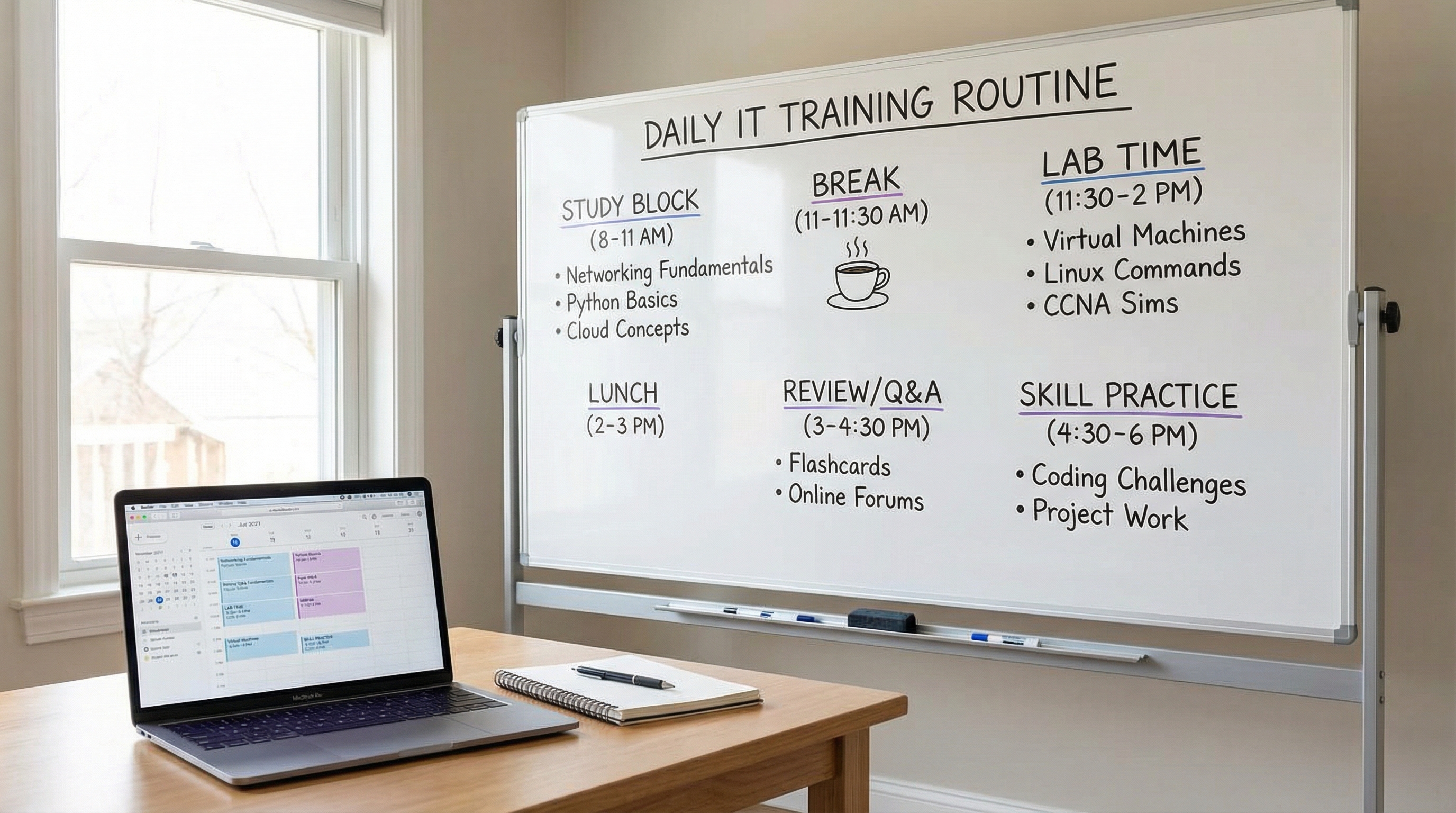
Prioritizing Tasks: Focus on What Matters Most
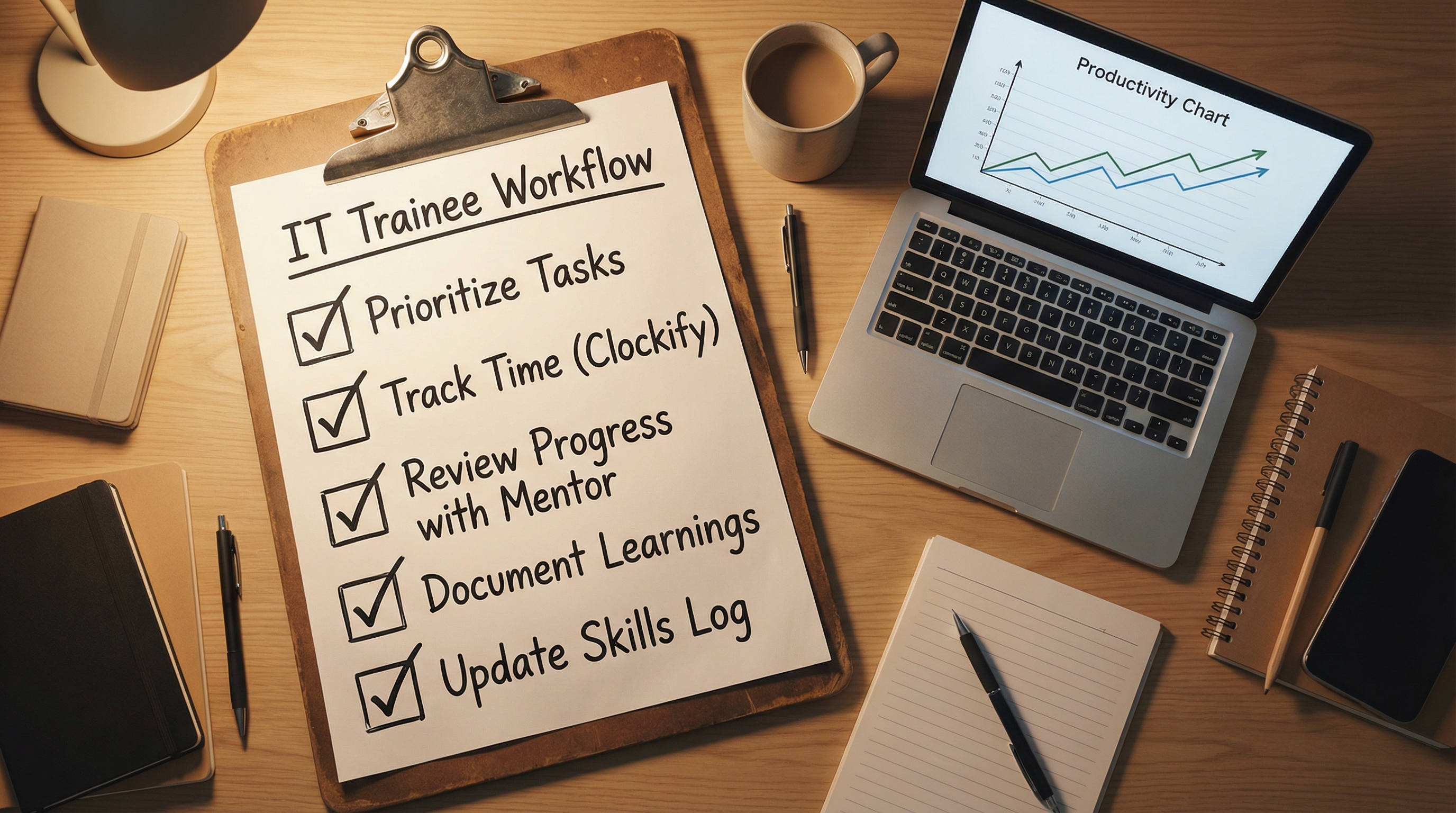
With multiple assignments, hands-on labs, and live sessions, prioritization is critical. Frameworks like the Eisenhower Matrix help you distinguish between urgent, important, and less critical tasks. Focus first on activities that directly contribute to your learning outcomes or certification goals, such as completing a cybersecurity project or preparing for a networking assessment.
How to Prioritize Effectively
- List all your weekly study tasks and categorize them by urgency and importance.
- Tackle high-impact, time-sensitive assignments first.
- Use checklists or digital boards (like Trello or Notion) to track your progress and avoid last-minute cramming.
Leveraging Technology and Time-Tracking Tools
Modern IT trainees have access to a suite of digital tools that can streamline study, track productivity, and reduce wasted time. Task management platforms such as Asana, Notion, and Trello help organize coursework and projects. Time-tracking apps like RescueTime provide data on your actual study habits, revealing patterns and areas for improvement.
Recommended Tools for Remote Tech Learners
- Trello, Asana, or Notion: Plan and visualize your coursework and deadlines in one place.
- RescueTime: Monitor where your time goes, identify distractions, and set focus goals.
- Pomodoro Technique: Use 25-minute focused sprints followed by 5-minute breaks to maintain energy and concentration (learn more about Pomodoro).
Setting Boundaries to Protect Your Study Time
When you study from home, it’s vital to set boundaries between your academic, work, and personal life. Clearly communicate your study hours to family, housemates, and friends. Mute unnecessary notifications and avoid multitasking during learning sessions. This mental “switch” helps you stay present and prevents fatigue.
Boundary-Setting in Practice
- Share your weekly learning schedule with those you live with to minimize interruptions.
- Use status indicators (on Slack, Teams, or your phone) to signal when you are in "focus mode."
- Log out of non-essential apps and social media during study blocks.
Work-Life Balance: Integration, Not Just Separation
In 2026 and beyond, work-life balance is about integrating your learning and personal goals—rather than keeping them strictly separate. By blending self-care practices, flexible routines, and supportive networks, you can thrive both academically and personally.
Strategies for Modern Work-Life Integration
- Schedule short self-care breaks throughout the day, such as mindfulness exercises or family time.
- Adjust your learning blocks to fit your most productive hours, not just traditional 9-to-5 windows.
- Engage with online study groups or mentorship programs to stay connected and reduce isolation.
NGT Academy’s hands-on, mentor-supported learning model helps trainees develop both technical expertise and essential soft skills for remote roles. Explore our Network Engineer Program + Cybersecurity Accelerator to discover how you can gain job-ready skills and career coaching to support your transition into tech.
How to Combat Distraction and Remote Learning Fatigue
Screen fatigue, loss of motivation, and distractions can derail even the most committed IT trainee. Combat these by mixing up your study methods—incorporate multimedia, quizzes, or hands-on labs. Set micro-goals for each session and reward yourself for completing them. If you feel your energy dropping, step away for a walk or connect with a peer for a quick check-in.
Continuous Self-Reflection: The Key to Ongoing Improvement
Time management is an ongoing process. Regularly reflect on what’s working in your routine and where you’re struggling. Use feedback from mentors, analytics from your digital tools, and your own observations to iterate and improve. Remember, growth in IT and cybersecurity is not just about technical knowledge—it’s about building habits that sustain lifelong learning and adaptability.
- Review your weekly progress every Friday and adjust your strategy as needed.
- Set new goals for the following week based on your successes and challenges.
- Don’t hesitate to reach out to your mentors or peer network for advice and accountability.
Personal Growth: Beyond Technical Skills
Successful IT professionals are not just defined by their certifications. Communication, adaptability, and self-leadership are equally important, especially as more tech roles become remote or hybrid. By mastering time management, you’ll not only excel in your training but also demonstrate to future employers that you are ready for the demands of modern IT and cybersecurity roles. Consider how the remote network engineer lifestyle reflects the importance of balance and discipline.
If you want to learn more about how NGT Academy supports your journey—including mentorship, hands-on labs, and career coaching—visit our FAQ page for answers to common questions about programs, eligibility, and financing.
FAQ
How can I avoid distractions while studying IT from home?
Designate a dedicated workspace, use focus techniques like the Pomodoro method, and mute non-essential notifications to create an environment conducive to learning.
What are the best tools for time management for IT trainees studying from home?
Digital tools such as Trello, Asana, Notion, and RescueTime help you organize tasks, track your time, and monitor productivity for more effective study sessions.
How do I balance personal life and remote IT training?
Set clear boundaries for study time, communicate your schedule with those around you, and integrate self-care breaks and personal commitments into your daily routine.
Why is self-reflection important for remote IT trainees?
Continuous self-reflection helps you identify what’s working in your routine, address challenges, and make ongoing improvements for better results and less stress.
Can NGT Academy help me succeed in a remote IT or cybersecurity career?
Yes, NGT Academy offers hands-on training, mentorship, and career coaching designed to prepare you for remote-ready roles in IT, networking, and cybersecurity.