
Cert Roadmap from Network Technician to Engineer: Essential IT Certifications & Skills Training Path
Cert Roadmap from Network Technician to Engineer | NGT Academy


Are you an aspiring IT professional, career changer, or veteran looking to break into networking or take the next step from help desk to network engineer? Understanding the cert roadmap from network technician to engineer is vital for building a future-proof skill set, gaining employer recognition, and unlocking higher salaries and impactful roles in today's digital world. This guide is for adults seeking hands-on training, structured pathways, and industry-backed certifications that can lead directly to employment opportunities and career advancement.
What Is the Certification Roadmap from Network Technician to Engineer?
The certification roadmap from network technician to engineer is a step-by-step pathway that starts with foundational IT certifications, such as CompTIA A+ and Network+, and advances through industry-recognized credentials like Cisco CCNA and CCNP. This path combines technical training, hands-on labs, and growing cybersecurity and automation skills to help you progress from entry-level support roles to high-impact engineering positions.
Why Do Certifications Matter for Networking Careers?
Certifications are powerful tools for validating your technical skills, especially if you lack a traditional IT degree. They demonstrate hands-on competency to employers, help you stand out in a competitive job market, and are often required or strongly preferred for both entry-level and advanced networking roles. From troubleshooting basics to advanced routing, security, and automation, each credential you earn proves your readiness for greater responsibility and pay.
The Step-by-Step Certification Pathway
Below is a structured roadmap that guides you from technician to engineer. Each stage builds upon the last, ensuring a solid foundation and clear direction for your career growth.
Step 1: Build Your Foundation (Entry-Level)
- CompTIA A+: Covers PC hardware, operating systems, troubleshooting, and basic networking. Ideal for those new to IT or seeking help desk roles.
- Google IT Support Professional Certificate: Focuses on troubleshooting, customer service, and basic cybersecurity; great for career changers or those without prior tech experience.

Step 2: Specialize in Networking Basics
- CompTIA Network+: Introduces you to network architecture, cabling, switches, routers, and protocols. This vendor-neutral cert is valued for help desk, support, and junior network roles.
Step 3: Advance with Vendor-Specific Certifications
- Cisco Certified Network Associate (CCNA): The gold standard for network engineers. Covers routing, switching, network security, and troubleshooting; highly regarded by employers using Cisco equipment.
- Juniper Networks Certified Associate (JNCIA-Junos): For those who want to diversify skills in Juniper environments, especially in enterprise or data center settings.
Step 4: Expand into Security and Advanced Networking
- CompTIA Security+: Entry-level cybersecurity knowledge, now a minimum for many IT and networking positions. Focuses on risk management, threat assessment, and incident response.
- Cisco Certified Network Professional (CCNP): For seasoned professionals. Proves expertise in advanced routing, switching, and troubleshooting complex networks. Yields higher salaries and leadership roles.
- Linux Professional Institute Certification (LPIC-1): Adds open-source expertise, increasingly important in modern network environments.
Optional: Specialize Further
- Certified Information Systems Security Professional (CISSP): For those aiming to lead security or architect roles. Requires prior experience but is a powerful long-term goal.
- Apple Certified Support Professional: Ideal for supporting Apple environments in business and education sectors.
What Skills and Knowledge Do Network Engineers Need?
Modern network engineers are responsible for designing, implementing, and maintaining robust digital infrastructure. Beyond technical knowledge, employers seek professionals who can:
- Configure, secure, and troubleshoot LAN, WAN, and wireless networks
- Deploy and manage routers, switches, firewalls, and access points
- Implement VPNs, SD-WAN, and network segmentation
- Automate tasks using Python or Ansible
- Monitor network performance and detect intrusions
- Document processes and collaborate across IT and business teams
- Stay current with emerging technologies, like zero-trust security and programmable networks
Soft skills such as communication, teamwork, and continuous learning are just as vital for long-term success.
How Do Certifications Boost Your Earning Potential?
Certifications are directly linked to higher salaries and faster career progression. In 2026, network engineers can expect base salaries ranging from $85,000 to $145,000+, with significant premiums for those holding advanced credentials like CCNP (+10-15%), CCIE (+25-35%), and security specializations (+15-20%). Experience, location, and industry especially finance and government can further boost compensation. With the right cert roadmap from network technician to engineer, you position yourself for ongoing salary growth and access to senior or strategic roles.
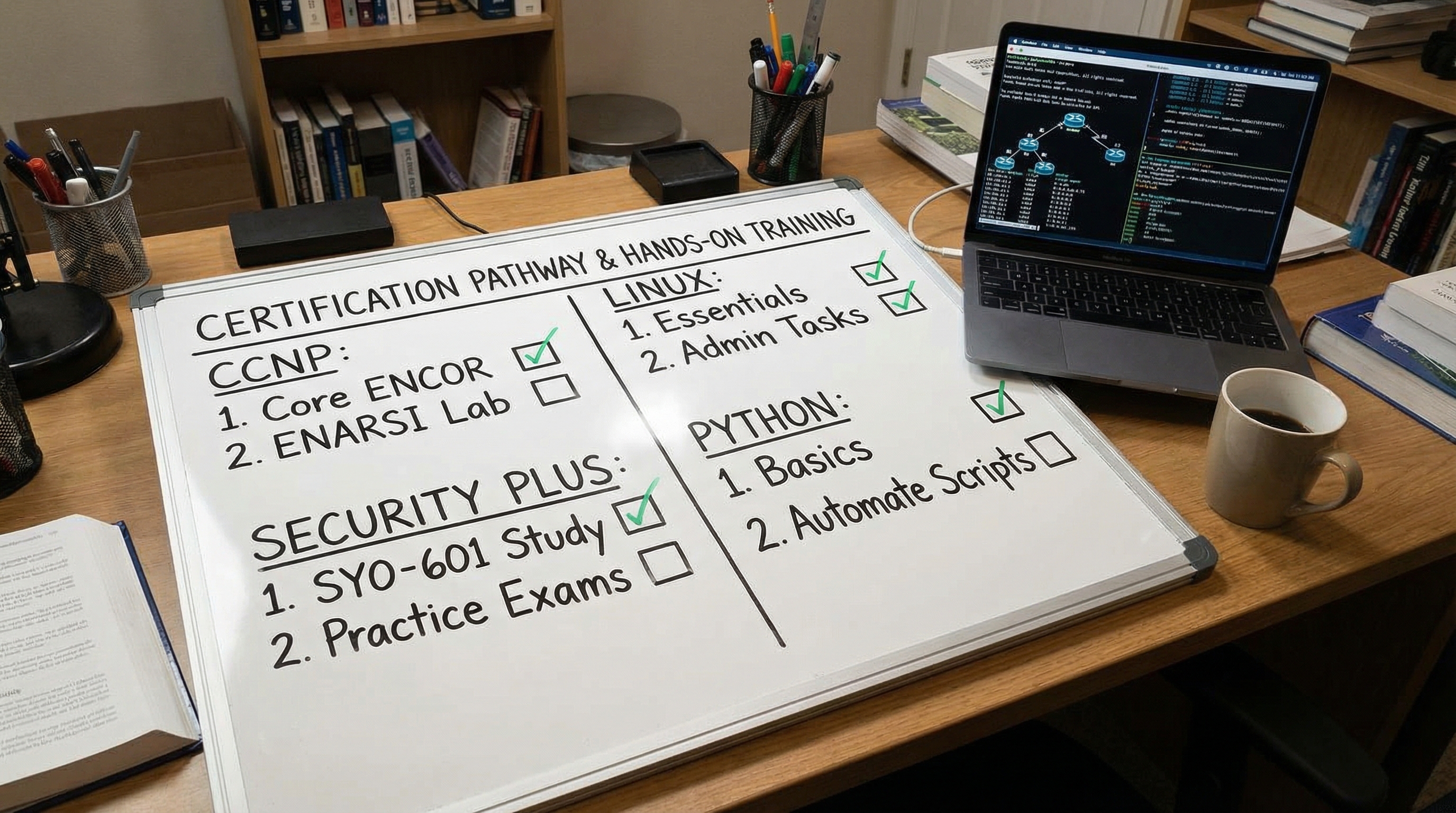
How to Stand Out: Hands-On Training and Real-World Projects
Employers increasingly value practical, hands-on experience alongside certifications. Building a home lab, participating in real-world simulations, and documenting your hands-on projects are essential for demonstrating your capabilities. At NGT Academy, our Network Engineer Program + Cybersecurity Accelerator offers live instruction, mentorship, and career coaching to help you master both technical and soft skills demanded in today’s market. Graduates learn to deploy, secure, and troubleshoot networks using industry-standard equipment and are prepared for immediate employment opportunities.
The Role of Cybersecurity and Automation in Networking Careers
Network engineering is evolving rapidly with the integration of cybersecurity and automation. Professionals who understand firewalls, VPNs, intrusion detection, and compliance (PCI DSS, SOX) are in high demand. Similarly, automation skills with tools like Python and Ansible are essential as organizations seek to streamline network management and reduce errors. By aligning your certification path with these trends, you future-proof your career and gain a competitive edge. For more insight, review SDN software defined networking.
Practical Steps for Building Your Cert Roadmap
- Start with foundational certs (A+, Google IT Support) to gain core troubleshooting and support skills.
- Specialize in networking (Network+, CCNA, JNCIA) for hands-on routing, switching, and security fundamentals.
- Add security and automation skills (Security+, Linux, basic Python/Ansible) to broaden your expertise.
- Advance to professional-level certs (CCNP, CISSP) as your experience grows.
- Document your learning and hands-on work to showcase your capabilities to employers.
- Stay active in professional communities and pursue continuous learning.
Ready to Level Up? Your Next Steps
The journey from network technician to engineer is achievable with a clear cert roadmap, hands-on practice, and structured support. Whether you are just starting out, changing careers, or looking to advance, choosing the right certifications and training will open doors to rewarding roles and long-term growth.
Explore how NGT Academy can help you accelerate this journey with live, instructor-led programs, real labs, and career coaching tailored for adults from all backgrounds. Learn more about our Network Engineer Program + Cybersecurity Accelerator to start building your future in IT and cybersecurity.
If you have questions about eligibility, requirements, or training options, check out our FAQ page for clear answers and next steps. Also see what IT recruiters look for in 2025.
FAQ
What certifications should I get to move from network technician to engineer?
Start with CompTIA A+ and Network+, then progress to Cisco CCNA and CCNP. Consider Security+, JNCIA, and Linux certifications to strengthen your technical profile and career options.
Do I need a college degree to become a network engineer?
No, many employers accept certifications and hands-on experience in place of a degree. Structured training and industry-recognized certs are often viewed as proof of job readiness.
How long does it take to complete the cert roadmap?
Most candidates can move from entry-level to qualified network engineer in 18-36 months, depending on prior experience, study pace, and hands-on practice.
How do I gain hands-on networking experience before landing a job?
Build a home lab, complete guided labs in structured training programs, and document your projects. Choose programs like NGT Academy’s that emphasize real-world practice and mentorship. For more guidance, explore real world labs vs traditional education.
What salary can I expect as I progress from technician to engineer?
Entry-level roles start around $50,000-$65,000. Network engineers typically earn $85,000-$145,000+, with higher pay for advanced certs, experience, and security skills.