
Top Ethical Hacking Certifications for Career Changers: OSCP, CEH, and eJPT Compared
Top Ethical Hacking Certifications: OSCP, CEH, eJPT Compared


Switching to a cybersecurity career is more achievable than ever, especially with the right ethical hacking certification. If you are looking to break into roles like penetration tester, red teamer, or security analyst, choosing the right certification can help you stand out to employers, validate your skills, and unlock higher salaries. This guide is specifically designed for adults pivoting into IT or cybersecurity, entry-level professionals ready to move up, and anyone who wants practical, job-ready skills validated by industry-recognized credentials.
Which Ethical Hacking Certification Is Best for Career Changers?
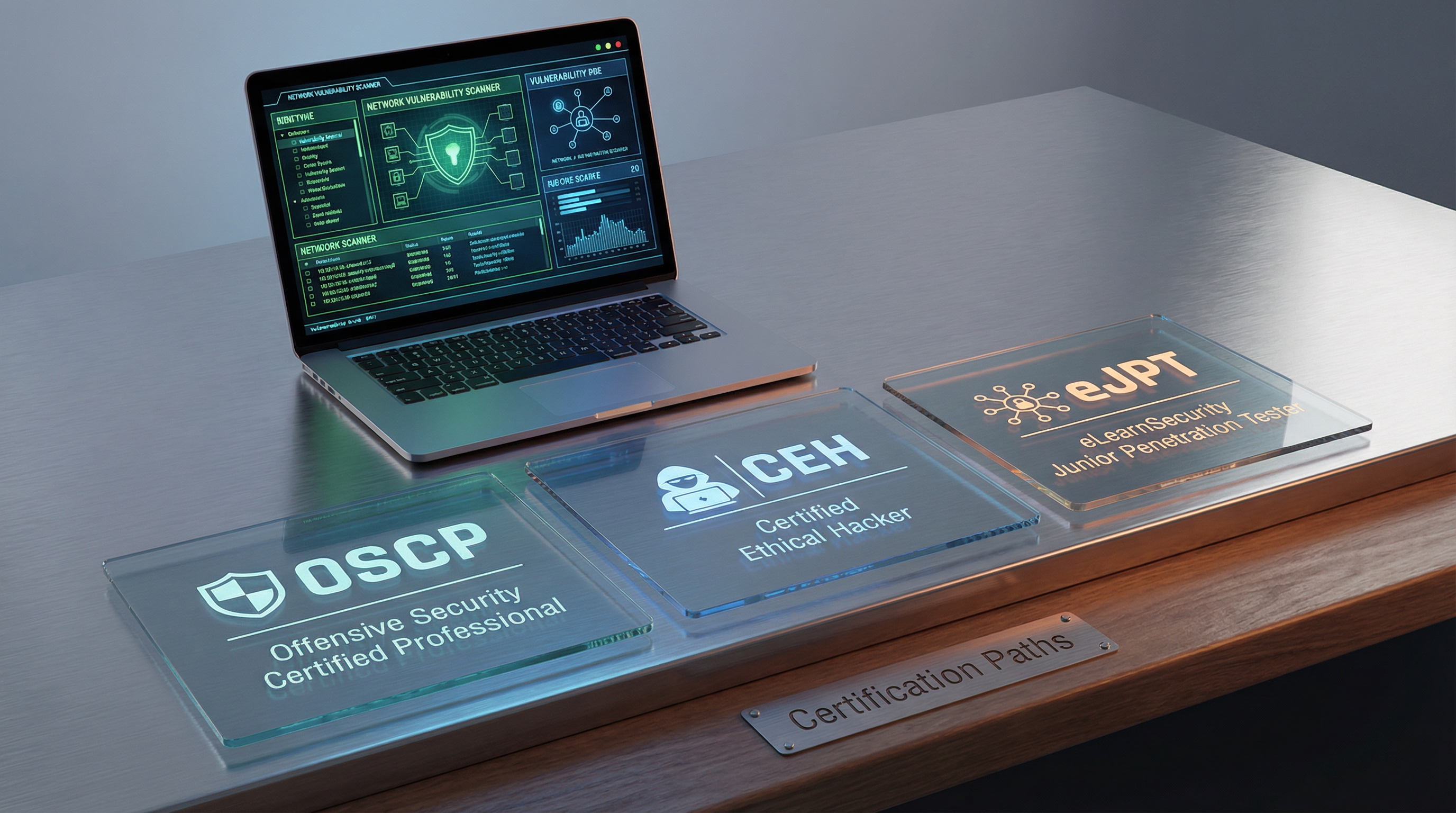
The top ethical hacking certifications for career changers are OSCP, CEH, and eJPT. OSCP is highly valued for advanced, hands-on penetration testing; CEH is widely recognized for foundational and compliance roles; and eJPT is an ideal entry point for beginners. The best choice depends on your current experience and career goals.
Why Ethical Hacking Certifications Matter in 2026
With cyber threats becoming more advanced, the demand for skilled ethical hackers has soared. Employers rely on certifications as a key hiring filter, especially for candidates without a traditional tech degree. According to recent studies, 91% of cybersecurity employers prefer or require certifications. Ethical hacking certifications demonstrate both practical and theoretical knowledge, boosting your chances of landing interviews, promotions, and higher salaries.
For career changers, veterans, and tech enthusiasts, certifications are a powerful way to prove your readiness for real-world cybersecurity roles. They also offer a clear path to move from entry-level jobs to specialized positions like penetration tester or security consultant.
OSCP: The Gold Standard for Hands-On Penetration Testing
What Is the OSCP?
The Offensive Security Certified Professional (OSCP) is renowned for its rigorous, practical exam and is often called the "gold standard" for penetration testing. It is sought after by employers for red team, offensive security, and advanced pentesting roles.
Key Features and Latest Updates
- Dual credential: Lifetime OSCP and renewable OSCP+ (valid for 3 years).
- Heavily focused on real-world attack scenarios, especially Windows Active Directory.
- Exam is 100% hands-on: 23 hours 45 minutes to compromise multiple targets, followed by a 24-hour report submission window.
- Requires deep skills in Linux, Windows, scripting, and privilege escalation.
- No more bonus points for course exercises; exam performance alone determines the result.
OSCP is best suited for those with some IT or security background, ideally after earning a foundational credential like eJPT or CompTIA Security+.
Career Impact and ROI
OSCP holders are highly employable, with 92% reporting promotions within a year of certification. Salaries typically range from $120,000 to $158,000 or more in the US. This credential opens doors to senior technical roles and is recognized worldwide.
Certified Ethical Hacker (CEH): Broad Recognition and Compliance
Who Should Consider CEH?
The Certified Ethical Hacker (CEH), from EC-Council, is designed for IT professionals, network admins, and new security analysts. It is especially valuable for those targeting compliance-focused or government jobs, as well as those who want a wide overview of hacking techniques.
What Is Covered in CEH?
- 20 modules across all major ethical hacking topics: reconnaissance, scanning, system and network hacking, malware, social engineering, IoT/OT security, and more.
- Latest versions (v13/v14) incorporate AI-powered labs, simulated hacking exercises, and current threat intelligence (including MITRE ATT&CK, APTs, ransomware).
- Exam includes a 4-hour, 125-question theory component, and an optional 6-hour practical lab (for CEH Master).
Prerequisites are moderate: two years' info security experience or completion of official training. CEH is considered moderately difficult, with the main challenge being the breadth of content.
Industry Value
CEH is widely recognized by government and enterprise employers. It is often listed as a requirement in cybersecurity job postings, especially for security analyst, penetration tester, and compliance-focused roles. Average US salaries are $87,877 to $126,547, and top performers can earn more. CEH is also recommended for those pursuing DoD 8570/8140 compliance careers.
eJPT: The Best Entry-Level Practical Ethical Hacking Certification
What Is the eJPT?
The eLearnSecurity Junior Penetration Tester (eJPT) is a 100% hands-on certification built for beginners and career changers. It requires no formal prerequisites, making it an excellent first step for those new to cybersecurity or penetration testing.
What Does the eJPT Cover?
- Network and web application scanning, vulnerability assessment, and exploitation basics.
- Privilege escalation, post-exploitation, and basic persistence techniques.
- Real-world skills: using tools like Nmap, Metasploit, Hydra, and Kali Linux.
- 48-hour practical exam, completed in-browser, with challenges that require active exploitation and flag retrieval.
The eJPT is recognized as a "first foot in the door" for cybersecurity roles. Passing validates your readiness for junior penetration tester and entry-level security analyst positions. US salaries typically range from $70,000 to $90,500 for these roles.
Choosing the Right Ethical Hacking Certification for Your Career Path
Selecting the right ethical hacking certification depends on your background and target role:
- Absolute beginners should start with eJPT or CompTIA Security+ to build foundational skills.
- IT professionals or help desk staff ready to move into cybersecurity can pursue CEH for broad, employer-recognized validation.
- Those aiming for advanced penetration testing roles should prepare for OSCP after gaining foundational experience.
Certification stacking is a smart strategy. For example, many professionals earn eJPT or Security+ first, then CEH, and finally pursue OSCP to maximize both marketability and earnings. For more on entry-level certifications and career roadmaps, see our Network Engineer Program + Cybersecurity Accelerator which combines hands-on training, live instruction, and expert career coaching to guide you from zero to hired in IT or cybersecurity.
How to Prepare for Ethical Hacking Certification Success
1. Assess Your Experience Level
Analyze your current technical foundation. Beginners should focus on networking and basic security before jumping into advanced certifications.
2. Choose the Right Training Approach
Combine self-study, instructor-led courses, and hands-on labs for the best results. Practical lab work is essential, especially for OSCP and eJPT.
3. Practice with Real-World Scenarios
Simulate exam environments, use practice tests, and document your exercises. Many certifications require a report or proof of your hands-on work.
4. Plan for Renewal and Continuing Education
Keep your certifications active by earning Continuing Professional Education (CPE) credits or taking renewal exams. This shows employers your commitment to staying current in the fast-evolving cybersecurity landscape.

Ready to Launch Your Ethical Hacking Career?
Whether you are a career changer, veteran, or aspiring security professional, the right ethical hacking certification can accelerate your journey into high-demand cybersecurity roles. Certifications like OSCP, CEH, and eJPT provide a structured path to mastering real-world skills, proving your value to employers, and achieving life-changing career growth. If you are ready to start your transformation with hands-on learning, mentorship, and career support, explore the NGT Academy Network Engineer Program + Cybersecurity Accelerator today.
FAQ
What is the best ethical hacking certification for beginners?The eJPT is highly recommended for beginners because it is affordable, 100% hands-on, and requires no experience. It is ideal for those new to cybersecurity or penetration testing.
How do OSCP, CEH, and eJPT differ in difficulty and recognition?OSCP is the most challenging and respected for advanced pentesting, CEH offers broad recognition and is moderately difficult, while eJPT is entry-level and accessible to motivated learners.
Do I need a degree for ethical hacking certifications?No, most ethical hacking certifications do not require a college degree. They focus on skills and practical knowledge, making them accessible to career changers and those without traditional backgrounds.
How long does it take to prepare for an ethical hacking certification?Preparation time varies: eJPT can be completed in a few months, CEH often takes three to six months, and OSCP may require six months or more of dedicated hands-on practice.
Where can I get career coaching and hands-on training for ethical hacking?NGT Academy offers live instruction, mentorship, and career coaching through our Network Engineer Program + Cybersecurity Accelerator.